Cyanite Talks #2 with Vincent Raciti from TRO – About AI in sound branding

Cyanite Talks #2 with Vincent Raciti from TRO – About AI in sound branding

For the second part of our interview series #CyaniteTalks we sat down with Vincent Raciti from the renown German audio and sound branding agency TRO. They not only have an outstanding brand image and a remarkable roster of clients. They also recognized very early the power of algorithms for their work and developed their own proprietary technology together with two universities.

Learn more in this interview about what DJs and sound strategists have in common, how TRO has integrated AI into their workflows and what artists shall look out for when they want to be considered for synch deals. Enjoy the read.


Cyanite: Hi Vincent, whether behind two turntables for a small rave community or in a team at TRO for big clients like Porsche and C&A: you develop music and sound strategies. In both cases it is important to anticipate moods and find suitable music for it. How do you manage this?

Vincent RacitiA DJ set, at least for me, includes preparation. You think about who might be expecting you in the club and to a certain extent, adjust your record selection. That doesn’t mean that I change music genre or style for a certain audience; but maybe select records with a little more or less energy. As a DJ I have a kind of ‘brand’ or ‘fixed style’ but I also work in accordance with the external factors present at each gig, and most importantly: find an empathy with my audience and keep a fascination for the music I play.

When we talk about a brand for which we want to find the right sound, we deal with similar parameters: Brand fit, consideration of the target group, empathy and creative intuition are key. Most of our clients have a huge international reach. But even at this scale, a fascination for music from our producers, creatives and strategists is of the utmost importance – 10 experts work on a large project with us. In order to always hit the bull’s eye when choosing the right sound for a brand, we have sought scientific support beyond intuition.

“Brand fit, consideration of the target group, empathy
and creative intuition are key.” 

Cyanite: That’s a good point: Five years ago, together with two universities, you developed your so-called “Sonic-DNA-Algorithm”, which classifies music based on brand values. How did you get the idea and what did you hope to achieve? And most important: How did it change your work?

Vincent: The effect of music on people is an extremely exciting field of research that we (collaborators involved in the project) have always dealt with individually. Through past projects we already knew a lot about the effects of music – but the knowledge was fragmented. So, we started to look for models that objectively describe the emotional effects of music in order to provide orientation in the selection of music for complex projects. Because we were not satisfied with the results of the research, we joined forces with the Düsseldorf University of Applied Sciences and the University of Osnabrück.

The collective approach was soon clear to us: we conducted studies in which test persons listened to music and while doing so, tagged perceived emotions. Then we started to teach a machine learning algorithm with this data so that we no longer had to conduct new listener studies for each project. Our Research & Development Leader Michael Wittland did an amazing job as a one-man team. He optimized the algorithm to such an extent that we see it as the core of our Sonic Branding projects.

This is how it works: Together with the client, we firstly determine an emotional profile of the brand. Based on the profile and the target group, the algorithm creates a musical mood board that is used by our creatives and music producers as the basis for conception. Newly created music can be checked with the algorithm for its brand fit.

Thanks to the emotion model we use, we can talk to our clients in a very clear and direct way about the actually very subjective topic of music – this helps all parties involved in such a project enormously.

“Thanks to the emotion model we use, we can talk to our clients in a very clear and direct way about the actually very subjective topic of music.” 

Cyanite: How do your customers react to the use of AI? Enthusiasm or skepticism? Can you identify tendencies, who is particularly open to new technologies? What characterizes such as pioneers?

Vincent: Algorithms are omnipresent, increasingly in both music and in marketing. Even Spotify is in the end a user interface with a lot of algorithms that make sure that you basically don’t have to select a song in your account anymore, and still love every song that is played automatically.

Our algorithm works differently because, similar to the algorithm of Cyanite, it tries to imitate a human being and identify emotions in the music. We use it as a supporting tool in complex processes. Despite its accuracy, every result is checked by our creatives, adjusted and implemented by our music producers and artists. And this is also important to communicate, because our clients would be rightly skeptical about an algorithm that does all the creative work – and ends up producing the music itself.

The way we use and communicate the technology has given us astonishingly good experience – 5 years ago, we were already allowed to use our work in progress’ algorithm’ in large projects for our customers.

In general, I believe that it is becoming increasingly important for all companies to identify, filter and effectively use new technologies.

You are currently viewing a placeholder content from Default. To access the actual content, click the button below. Please note that doing so will share data with third-party providers.

More Information

TRO’s music and audio production for a mighty Porsche ad featuring Peggy Gou

Cyanite: The loss of live revenues due to the current crisis is bringing license revenues from Sync even more into focus. What do you give to young artists who want to score a sync deal?

Vincent: It is important to be where the gatekeeper is. And these are practically the same platforms on which you present yourself as an artist one way or another: like streaming, radio and social media. I think, even if it might sound tempting now to focus on syncs, or in the short term paid placements of music in media, it’s much more crucial in the long run to work authentically on your brand awareness and artist brand. That’s how the gatekeepers become aware of you. Label, publisher, management and distribution can of course help with a network and infrastructure to pitch the music directly. Dubious offers that promise quick sync success or want to bind artists exclusively, cost money and will rarely bring happiness.

“Dubious offers that promise quick sync success or want to bind artists exclusively, cost money and will rarely bring happiness.”

Cyanite: Is sound branding crisis-proof? What is a current development that could pose a threat?

Vincent: No, I don’t think any “industry” is crisis-proof. Let’s take sound branding as an example – shooting film is currently prohibited so there are no new TV or media spots that we can set to music. Also for us, this means that we’re working on fewer projects. But we see this strained situation also as an opportunity: If it is not allowed to shoot with actors, more animation is simply created – and then perhaps it will end up in our studios for dubbing. Personally, we have also gained exciting new customers during the Corona period, who have used this time to take a strategic look at the use of music and sound in respect to their brand.

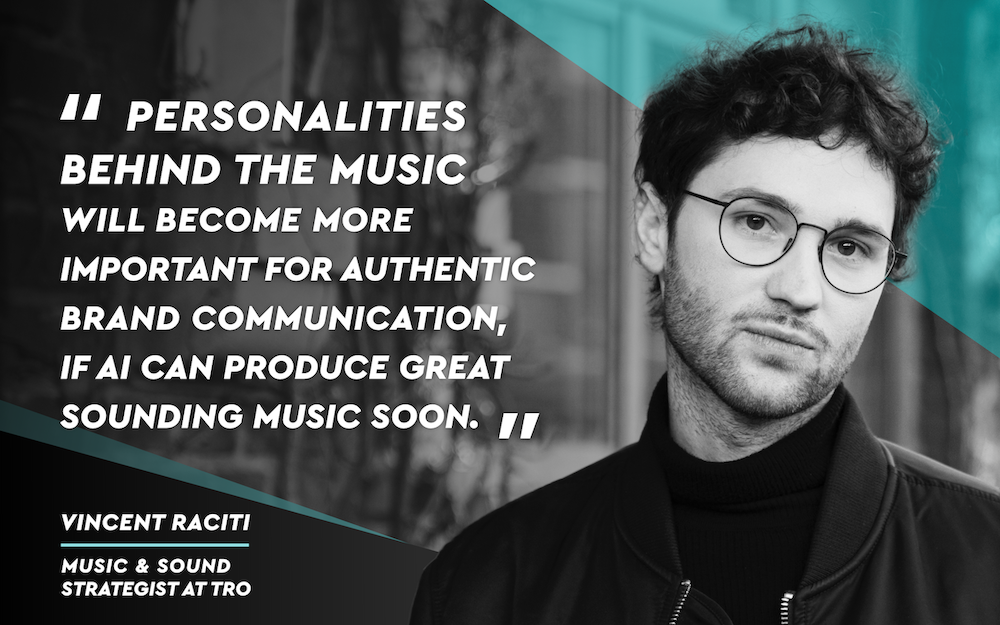
Audio-only media such as podcasts and smart assistants will generate reach for brands that was previously only achieved via TV and radio. Culture and the personalities behind the music will become more and more important for authentic brand communication – especially as a distinguishing feature, if AI really can produce great sounding music soon.  All in all, I see more opportunities than threats for the industry if it is open and proactive in shaping these developments together with its customers.   


Thank you for taking your time Vincent! Shout-outs to the TRO gang and all the best for the upcoming projects.


4 Ways How We Use Music To Regulate Our Emotions In Everyday Life

4 Ways How We Use Music To Regulate Our Emotions In Everyday Life

Music listening is an integral and oftentimes purposeful activity in our daily lives. We listen to particular tracks in order to change our current emotional state or in order to maintain it. How we react to a particular song not only depends on the musical attributes of that song but on various situational and personal factors.

Originally posted on our Groovecat blog, written by Sami Behbehani , 15. March 2019

Possibilities for musical self-regulation are limitless in today’s modern society. Technical advancements such as smartphones, high-quality earphones, and music streaming have enabled listeners to access massive song-libraries from anywhere, at any time.

Consequently, individuals can immediately react to new circumstances by adapting their listening strategy accordingly.

However, the process of self-regulation through music is highly subjective and dependent on various factors.

Perceiving an emotion doesn’t mean that you feel it the same as other people


A song is a construct, whose single elements merge and ultimately communicate a particular feeling or atmosphere. Most likely, a listener will perceive this feeling accurately. Yet, the feeling having any effect on the emotional state of the listener is not given.

“Whether a certain song evokes an emotion or not depends firstly on the listener’s musical preference, secondly the previous listening experience and thirdly, empathy with the recording artist” – Sami Behbehani

As in movies, a certain degree of identification with the protagonist is preconditioned for the story to touch the audience. In a musical context, empathy is the precondition for a song’s story to strike interest and cause emotional contagion. Studies have shown that with an increasing degree of empathy towards a song/artist, a higher correspondence between perceived and felt emotion during music listening can be experienced.

Your listening environment influences your music selection more than personal attributes

Some recent scientific studies have shown situational circumstances to have a stronger influence on the process of music selection than personal attributes of the listener. However, capturing the essence of a situation is a complex and scientifically still relatively unexplored issue. Situations do not only include physical elements such as location, persons, weather, time of day etc. But there is also the aspect of how a person reacts towards these respective elements. This aspect even includes potential highly complex interactions between person and situation.

In our daily lives, we experience various situations that affect us in different ways and to which we react accordingly. While some of these situations occur spontaneously, others allow us to plug in our earphones or switch on our speakers. For instance: On our way to work we might get bored and hence need something to lift us up; while getting ready in the morning we might want to start the day off on a positive or energetic note; when we socialize with others we like to create a comforting atmosphere; and in order to prepare for a stressful situation we want to reach a higher state of excitement, in order to handle the situation better

Common strategies of emotional regulation

  1. Aesthetic enjoyment

Studies have shown that personal well-being is a key motive for music listening. When listening to preferred songs it makes the listener draw enjoyment from the overall listening experience. Liked music was shown to trigger the release of neurological messengers such as dopamine and serotonin, signaling pleasure and reward to the system, resulting in increased comfort. This can be interpreted as a mood-improvement process through aesthetic stimulation, which however does not modify the listener’s emotion in a specific fashion.


  1. Sustaining cheerfulness

Further in line with the principle of emotional regulation is a deliberate choice of songs that communicate emotions parallel with those felt by the listener. Persons experiencing cheerfulness tend to listen to happy music more frequently because they like to maintain the emotional state they are in. This is a common strategy in situations where social interaction between persons is desirable, as at parties or relaxed evenings with friends.


  1. Emotional Self-therapy

Another strategy that directly influences a music listener’s emotional state is utilized when experiencing negative emotion. Sad music, for instance, is highly popular amongst listeners of different genres on the one hand; and on the other hand, it can exert a strong effect on the listener. As compared to happy music which rather maintains or enforces an existing emotional state, sad or depressing songs are more commonly used for musical self-therapy. If previously mentioned mechanisms such as empathy with the song/artist, preference for the style etc. are given, sad music can mirror the listener’s feelings and therefore help to process experienced sadness, ultimately resulting in uplift.


  1. Stimulation

Aggressive music is a special case in itself because it can be positively stimulating on the one hand yet also expresses a negative emotional connotation on the other hand. Listening to aggressive music while experiencing feelings of aggression can have a channeling effect. Beyond that, intense music, aggressive music, in particular, enables the listener to achieve a higher degree of stimulation. This effect is consciously or subconsciously utilized by music listeners in order to: get pumped up for physical activities such as sports or dancing; motivate themselves to pull through monotonous tasks such as housework and cooking; or prepare themselves mentally for events known to include conflict and negative stress.

You are currently viewing a placeholder content from Default. To access the actual content, click the button below. Please note that doing so will share data with third-party providers.

More Information

You are currently viewing a placeholder content from Default. To access the actual content, click the button below. Please note that doing so will share data with third-party providers.

More Information

You are currently viewing a placeholder content from Default. To access the actual content, click the button below. Please note that doing so will share data with third-party providers.

More Information

Implications for the future

It can be suggested that any form of maintaining or improving one’s emotional state through music falls under the category of musical-self therapy.

There is however no auditive all-around solution for daily needs since individuals vary in their personal attributes and situations exert different effects on different people. Since music recommendation algorithms rarely or not at all focus on mentioned aspects, it is unlikely for them to serve as an adequate daily regulation-tool for listeners.

Research is still at a point where new discoveries can potentially shake up the field and though there are several studies with valid findings, most likely no study will ever be able to include all parameters that fully explain human music listening behavior.

From the consumer’s perspective, the last few years of technological development have facilitated a free and goal-driven use of music. This positive development could continue in the future with tech-companies and start-ups working on new ways for music to fulfill the listeners’ potential needs.


How to Build Trust with the Music Industry Gatekeepers – 3 Working Ways

How to Build Trust with the Music Industry Gatekeepers – 3 Working Ways

Let’s face it: your success as an artist is significantly influenced by the amount of love you get from the gatekeepers of the music industry. But who are the gatekeepers in the music industry? Music gatekeepers are the people and entities that control access to your audience. Namely, these are bloggers, playlist curators, magazines, social media influencers, A&R’s, radio DJs, etc. They have the keys to the doors or “gates” which provide access to the audience and sales. They can also become a bottleneck on your way to music fans.

Usually, the track reaches the audience through a complicated chain from the artist to a record label, radio station, press, retail stores, and event booking agents. So gatekeeping in music is a regular and widely accepted practice. In recent years, some of the gatekeepers were substituted by streaming platforms and music curators. These “new” gatekeepers combine human and algorithmic editorial practices to form the playlists and influence music listeners. This source establishes that there are around 400 music curators worldwide who work for Spotify, Apple Music, Deezer, and Google Play Music. There are also personal playlists and music blogs’ playlists on all the platforms. 

The key to their heart is: 

  • Understanding how they got there
  • Helping them stay relevant to their audience.

Gatekeepers in music are not that different from you. It took them hard work and time to establish trust with their audience which is why they have so much influence. Knowing that the gatekeepers will deliver what the audience wants, makes people stick to a blog, playlist, or radio station. The listeners know what to expect. For music industry gatekeepers, this means that they have to deliver fresh content at a good level of continuity – both in time and style.

So in reality, the music industry gatekeepers are dependent on YOU and your music! This is important to understand. Yet, you are not the only artist around. This means, they constantly have to choose between several songs or artists, and you need to make it easy for them to decide in your favor.

 YOU DO THIS BY EARNING THEIR TRUST.


  1. Show them that you mean it.
  2. Show them they are not alone in supporting you.
  3. Show them that their audience will like the track.
Tip 1. Show them that you mean it
Gatekeepers want to endorse an artist for a longer period of time. For this, they need to know that you stick around. Is there only one EP and then you’re done or are you organically building a sustainable career? It falls back badly on a gatekeeper if they keep recommending artists to their audience that are out of the picture pretty soon. Naming a strong team behind you (producer, label, photograph, etc.) or a couple of tour dates can help you prove that you are in the industry for the long run. 

A brand image that evolves around your music also shows a serious level of professionalism. Don’t ignore your branding as an artist as it helps create a consistent identity that the audience gravitates toward. This read by Spinnup sums up this topic very well.

Tip 2. Show them they are not alone in supporting you
Your social media and Spotify game are key to this. Followers, engagement, listeners, growth! Use all the stats you have access to. If you have no Social Media presence yet, use anything that might make the music gatekeeper trust that your career is growing. This can be blog features, record reviews, or previous playlist rankings. 

Some gatekeepers will only take your song if they see that you’re actively promoting it on your side. You can do that by advertising on Facebook, Instagram, or Twitter. For a clever hack on social media advertising, visit the guide How to Create Custom Audiences for Pre-Release Music Campaigns in Facebook, Instagram, and Google.

Tip 3. Show them that their audience will like the track
This is especially important if you’re just starting your career and have nothing to show yet. As pointed out earlier, gatekeepers must keep some degree of consistency in the musical styles they recommend. Show them that your music goes in line with their previous music picks. You can achieve this by doing your homework:

1. Listen carefully to all their music, radio shows, playlists, mixes, etc., and find common characteristics.


2. Make use of music analysis tools to support your pitching with objective data.

The analysis tools give some sort of neutral perspective on your music and the gatekeeper’s offerings and serve as an objective advocate. A solution like Cyanite displays the emotional profile and musical style of your songs. When you analyze the playlist that you want to be placed in and the profiles match, chances are high that the playlist curator will consider your song.

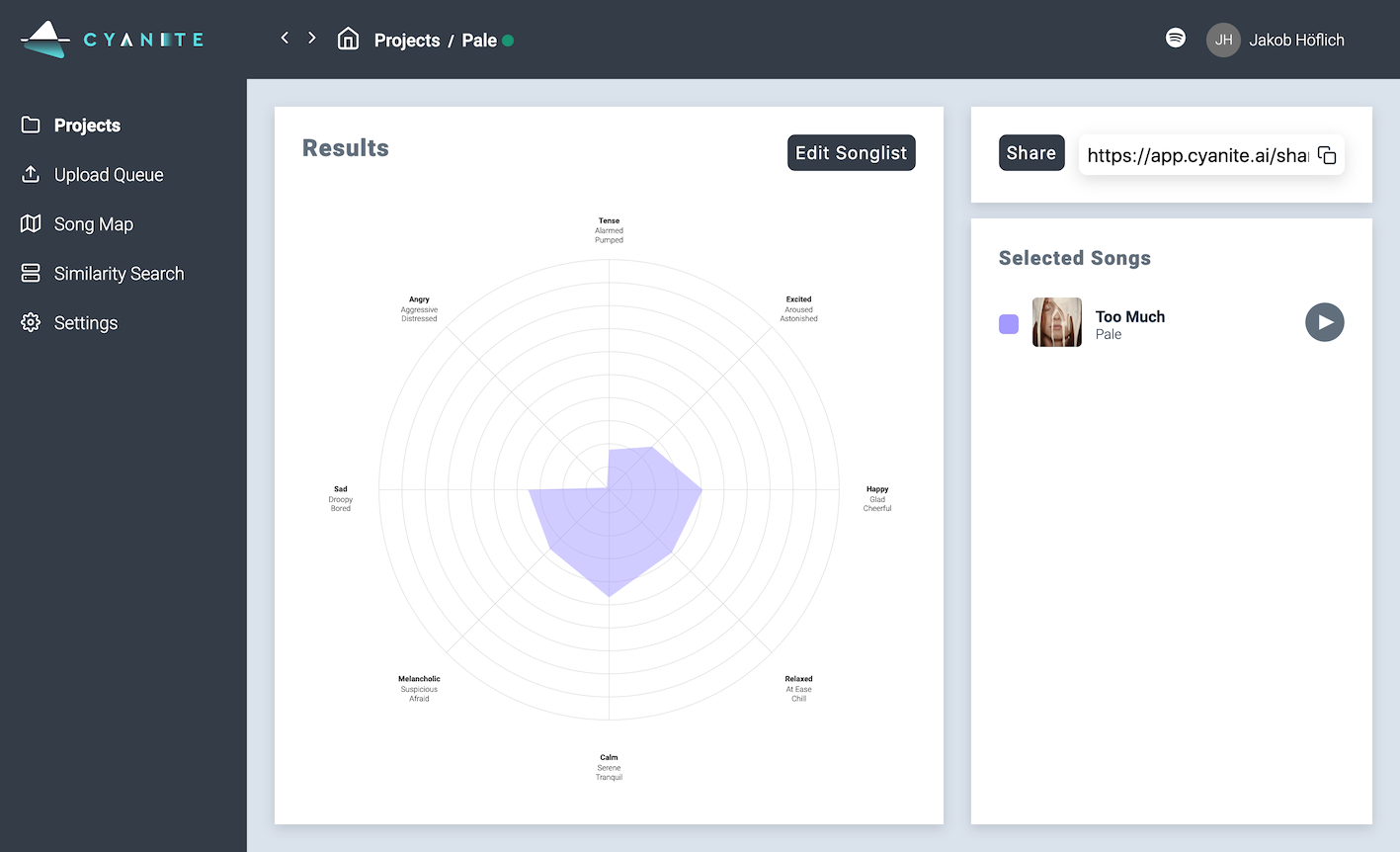
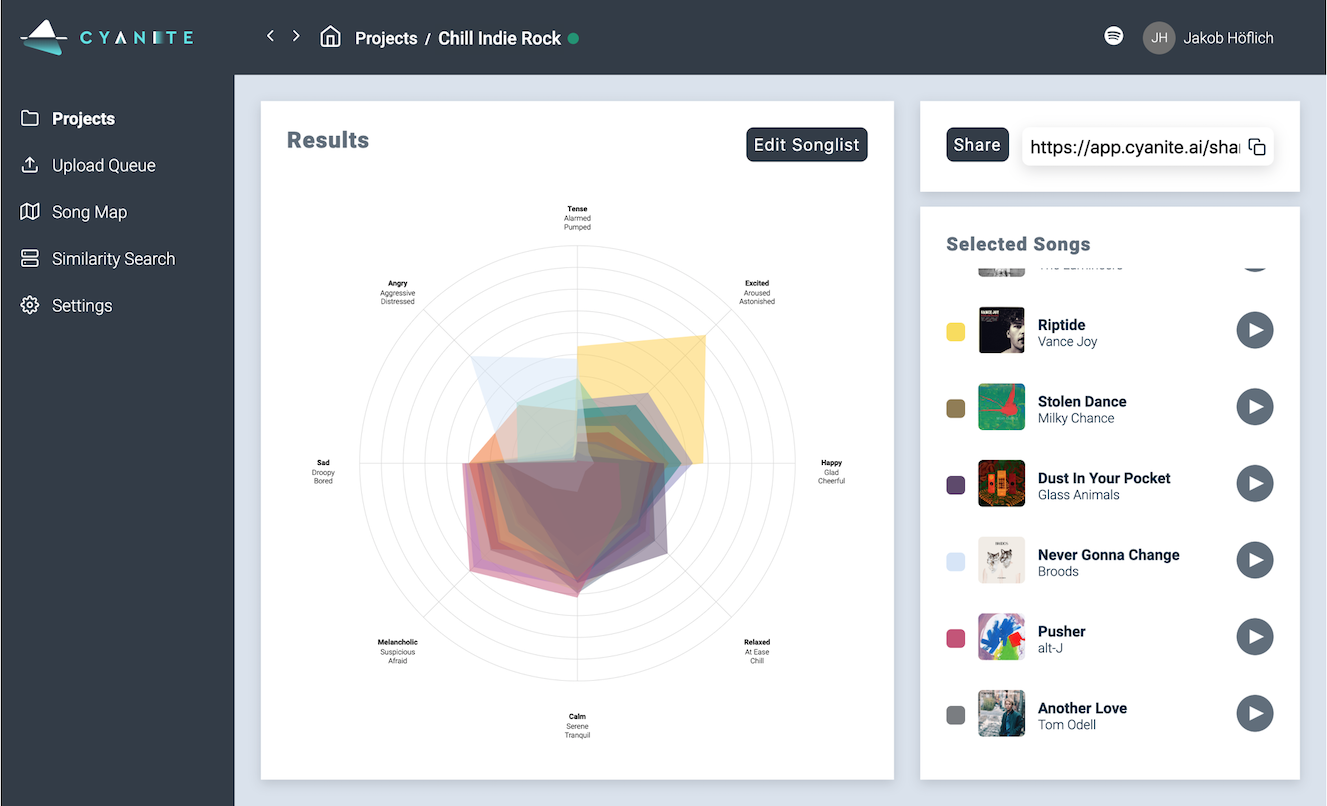
Let’s explore an example. Below you see two screenshots taken from Cyanite: the first one is the emotional profile of the song Too Much by the British band Pale, and the second one is the independently curated playlist Chill Indie Rock. Imagine you are pitching the song to the curator of the playlist. You can add the “emotional fit” as another piece to your story.

However, if it doesn’t match, find a playlist that does. We created a more detailed guide on how to pitch playlists in music streaming – read it before you start pitching Spotify curators.

Screenshot 1: Track Mood Analysis of Pale – Too much

You are currently viewing a placeholder content from Default. To access the actual content, click the button below. Please note that doing so will share data with third-party providers.

More Information

Screenshot 2: Playlist Chill Indie Rock

You are currently viewing a placeholder content from Default. To access the actual content, click the button below. Please note that doing so will share data with third-party providers.

More Information
Networking with the music industry gatekeepers
This point relates mainly to music blogs and the press. These industry gatekeepers receive thousands of emails each day from artists and managers pitching their music. 

Networking in the music industry involves being active on social media and commenting and sending supporting tweets to blog owners. A mutual connection by email or LinkedIn is ideal, as it increases trust, but it is hard to come by. By supporting the gatekeeper and being an active fan, you can make sure it is not a completely cold approach

While it is important to network with the gatekeepers through social media channels and email, it is more important to understand the angle of the media and how well your music fits into it. To see how you can identify the right match see the article How to Write Press Releases and Music Pitches with Cyanite.

Conclusion

Gatekeepers have hundreds of people contacting them every day but only a limited amount of time to sift through the endless stream of music. For the most part, they have a very distinct kind of music/artist they cover. ‘Musical style’ is only a small part of it – they also consider the stage of your career, looks, affiliation to other artists, political affiliation and engagement, and your lifestyle.

If you are not somewhat a perfect match: don’t bother writing to them as it is better to spend that time creating new music and/or building up your Social Media game and brand image around your music. With the gatekeepers that match your music though, make sure you use a warm approach, show them that you are serious about your music, and make use of the analytics and AI tools out there to enrich your story with objective data that will help the gatekeepers make a positive decision.

About the Author

Markus ist the Co-Founder and CEO of CYANITE. Before he co-founded the boutique label Serve & Volley Rec. and worked at the music promotion agency Shoot Music.

I want to use Cyanite to reach the music gatekeepers – how can I get started?

Please contact us with any questions about our Cyanite AI via sales@cyanite.ai. You can also directly book a web session with Cyanite co-founder Markus here.

If you want to get the first grip on Cyanite’s technology, you can also register for our free web app to analyze music and try similarity searches without any coding needed.