PR: RTL integrates Cyanite’s algorithms into its music library FAR MUSIC

PR: RTL integrates Cyanite’s algorithms into its music library FAR MUSIC

PRESS RELEASE:


RTL integrates Cyanite’s recommendation algorithms into its own production music library FAR MUSIC


The Mannheim-based technology company Cyanite enriches the in-house production music library FAR MUSIC of Mediengruppe RTL GmbH with its innovative algorithms for music analysis and recommendation. Cyanite’s AI will make it easier for editors and journalists to quickly and intuitively find the right music for their film clips. The Mediengruppe RTL GmbH is the largest customer so far on Cyanite’s mission to accompany music and media companies into the AI age.

Mannheim/Cologne, August 18th, 2020 – The Mediengruppe RTL GmbH is one of the largest German media companies. Part of which are the TV-Channels RTL, RTL II, VOX, and n-tv as well as the music publisher i2i Music, whose catalogue is available to all RTL editors for all types of use via the music platform FAR MUSIC.

With the help of the Cyanite deep learning technology, the music search on FAR MUSIC will be made easier and more intuitive. This will increase user-friendliness, ensure high-quality content, and reduce the costs for licensing third-party copyrights.

Specifically, RTL / i2i Music will use Cyanite’s algorithms for automatic music keywording and for detecting acoustic similarities in songs. In addition to musicological factors such as BPM or key signature, genre, mood, vocals, energy, and instruments are recognized and correspondingly indexed. Furthermore, RTL editors will be able to find similar-sounding pieces on FAR MUSIC via reference songs from YouTube or Spotify.

The Mediengruppe RTL GmbH is Cyanite’s largest customer to date. They join SWR, NEUBAU Music and Meisel Music, and the production music libraries Soundtaxi, Filmmusic.io and RipCue Music, who already use Cyanite’s technology.  

Markus Schwarzer, co-founder, and CEO of Cyanite: “Having such a large and renowned company as RTL / i2i Music among our customers marks a milestone for us. It shows how more and more companies are relying on the new possibilities of artificial intelligence to optimize processes and take advantage of new business opportunities.

Lutz Fassbender, Director Copyright Affairs, Mediengruppe RTL GmbH: “In Cyanite, we have found the perfect AI partner who equips us with important, innovative future technology for our music platform and whom we trust to develop future models.

Anyone who would like to convince themselves of Cyanite’s technology can register for the Web App free of charge and upload music or integrate Cyanite into an existing database system via a programming interface.


Try Cyanite for free: https://app.cyanite.ai/login

Full press release and material herehttps://drive.google.com/drive/folders/1fIzNSMHSviLPQq4q97AipWcffGfhJB9s?usp=sharing
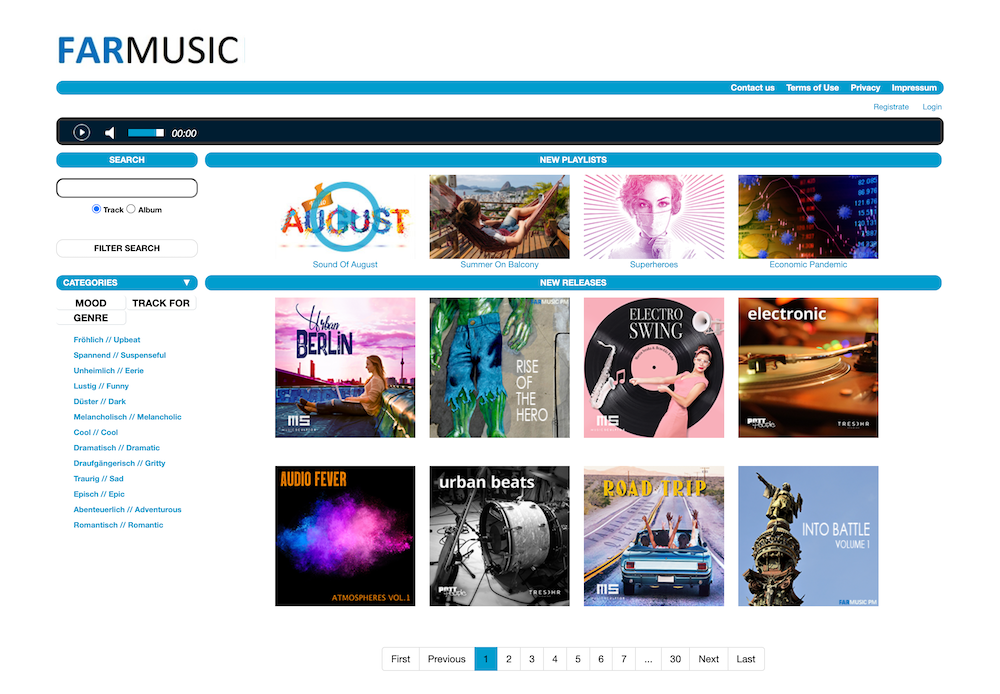


The current interface of FAR MUSIC

Background to Mediengruppe RTL / i2i Music / FAR MUSIC:

i2i Music is an interface and service provider between producers, editors, and marketing experts on the one hand and composers on the other. The publishing house distributes commissioned compositions for film, television, and radio and has music produced for the advertising sector. The core tasks of the publishing house include the financing of music projects as well as their complete administrative implementation: the creation of music lists, the control of GEMA documentation, and the worldwide royalty collection. The production music offer of i2i Music is called FAR MUSIC and is aimed at filmmakers, editors, and producers of trailers, advertising, and online content of the Mediengruppe RTL GmbH. The platform offers a wide variety of musical styles and provides tracks of all genres for download. Music seekers can use keyword or filter searches, combine music and sound effects in playlists and download their favourites. The FAR MUSIC catalogue includes international labels from Germany, Great Britain, and the USA.


Background to Cyanite:

Cyanite believes that state-of-the-art technology should not be exclusive to big tech companies. The start-up is one of Europe’s leading independent innovators in the field of music-AI and supports some of the most renowned and innovative players in the music and audio industry. Customers and music companies using Cyanite include the radio station SWR, the music publishers NEUBAU Music and Meisel Music, and the production music libraries Soundtaxi, RipCue Music, and filmmusic.io. Cyanite’s mission is to help music companies make the transition to the age of AI without spending expensive resources on tech-innovation. The 10-person team from Mannheim and Berlin operates at the interface between the music industry, data science, and software engineering. The founding team emerged from the Popakademie Baden-Württemberg – Germany’s top-university for the music business. They are completed by a team of data scientists from one of the world’s most renowned chairs for Music Information Retrieval at the Technical University of Berlin. The company, known from the magazines Musikwoche and Music Ally among others, has already received numerous awards from TechCrunch, Google, the German Government, Business Punk, Music WorX, German Accelerator and is currently a participant in the Accelerator Marathon LABS of the music company Marathon Artists in London. Cyanite is financed by the city of Mannheim and various business angels, such as Germany’s Business Angel of the Year 2019, Dr. Andrea Kranzer.

Press contact
Jakob Höflich
Co-Founder
+49 172 447 0771
Jakob (@) cyanite.ai 

Headquarter Mannheim
elceedee UG (haftungsbeschränkt)

Badenweiler Str. 4
68239 Mannheim

Office Berlin
Cyanite
Gneisenaustraße 44/45
10961 Berlin

Website: https://cyanite.ai/
LinkedIn: Cyanite.ai 
Twitter: Cyanite.ai

Electronic music experts reveal 4 essential factors on AI-tech adoption for SMEs

Electronic music experts reveal 4 essential factors on AI-tech adoption for SMEs

We are excited to publish a recent study by Laura Callegaro, a master researcher from the Berlin School of Economics and Law, a longtime electronic music expert and co-founder of the Berlin-based techno label JTseries.

In this guest article, Laura shares 4 essential factors on adoption of AI solutions within the industry based on her research. 

Originally written by Laura Callegaro


In electronic music, original scenes are challenged as some small-scale events burgeon into festivals, as market growth and fan-bases develop, DJ cultures become celebrity cultures – with luxury brands like Porsche signing up female Djs – and as electronic music events become cultural experiences. For a market that has quickly turned from niche to mainstream, it may not be a surprise to see that the week’s top 100 most played Spotify tracks are almost entirely dominated by electronic music production. 

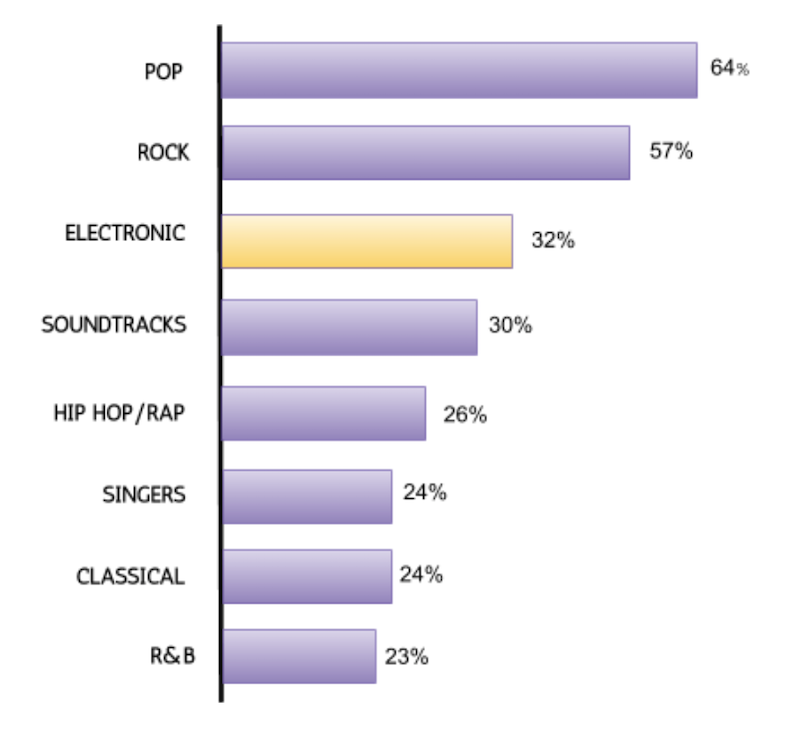
A recent survey presented at the International Music Summit in 2019, ranks electronic music as the World’s 3rd most popular genre with an estimated 1.5 billion people typically listening to it.

Source: IFPI Music Consumer Insight Report 2018

“The introduction of mature AI allows creatives and corporations alike to reimagine the creative process.” 


This snapshot of contemporary popularity works just as another clear indicator of a new mainstream – in which electronic music has become more central – within the global popular music market. AI is having a significant impact on those roles that are currently most systematic and routine in nature: search, audit and elements of due diligence. The introduction of mature AI allows creatives and corporations alike to reimagine the creative process, target new fans, and identify the next set of musical stars with greater accuracy and precision than we ever imagined.

The research highlights the challenges and opportunities induced by AI in this booming industry, and it focuses on the “What and Why” of SMEs managerial processes under a new edge. Many academic studies have analyzed the cultural, political and social dynamics of this field, but very few have analyzed the economics of this industry. Through semi-structured interviews of both actors – providers and users of AI music marketing tools – combined with qualitative research of primary data, the study relies on the so-called TOE framework. This is one of the most insightful for IT and system adoption research and it helps to identify the different factors of adoption into three dimensions of enterprise context: technological, organizational and environmental.


FACTOR 01: Trust the machine

From the data analyzed, It has been demonstrated that there is overall trust in AI systems – 90% of positive sentiment – which are perceived as free of bias. In fact, just one out of 4 users pointed out that these machines are programmed by humans, and therefore it is impossible to have AI 100% free of bias: matter unfortunately already proved by facts. In relation with the research done, this important factor shows the essential need of a tight collaboration between humans and AI powered machines, which allow us to perform ingenious results by analyzing infinite numbers of data in a matter of seconds.


It’s essential that humans and AI-powered machines collaborate.

FACTOR 02: Agility wins

Firm size divided the respondents’ opinion widely. The variance between the answers was based mainly on the agility of the decision making process and financial resources of the organization analyzed. A common idea among all the interviewees is that the failure of new technology would have less impact on larger firms, which normally are the ones with larger financial resources. On the other side, 50% of them recognized that agility of smaller companies simplifies the adoption process and makes it more efficient.

Based on the findings, it can be argued that technical skills and financial resources are connected. We can also notice a variation between the replies considering the role played by financial resources, where the responses were heavily dependent on the cost of the exact system the respondents had operated with.

Agility fosters efficiency

FACTOR 03 – Tech-savviness is not key

Technical skills and financial resources in organizational context are strictly connected and in the adoption phase they can sometimes turn into constraints, especially when considering SMEs users. Surprisingly 70% of providers and 50% of users don’t see tech skills or financial resources among personnel as an important factor in the adoption process. Background and expertise in AI technology are not as necessary as understanding how to employ it within the company and the huge benefit coming from the implementation of such technology outweigh the cost.

While providers of AI music solutions do not perceive tech skills as an essential factor, pointing out that sales directors have normally limited knowledge of marketing technology tools and did not use this type of innovative solutions in the past. Consequently, digital tools are not often at the top of sales managers priority list, but they recognize the value of adopting them. 

Surprisingly 70% of providers and 50% of users don’t see tech skills or financial resources among personnel as an important factor in the adoption process. Background and expertise in AI technology are not as necessary as understanding how to employ it within the company and the huge benefit coming from the implementation of such technology outweigh the cost.
Laura Callegaro

Researcher & Music Industry Expert

FACTOR 04 – Shift of power

Knowledge through data is more and more accessible

It is clear that there is a larger trend towards searching for technologies that can analyze various industry data points on up and coming artists and predict who the next big stars may be. What this study has brought to light, and that has been confirmed also by the interviewees (especially by providers) is that we are assisting a big shift of power. From managers, booking agents and label owners straight to the artists’ hands: thanks to new technology applied to marketing and the manifold new ways of music consumption, potentially everyone could be the manager of himself.

However, at the moment, this could be a false hope since marketing and managerial skills are still required.

For the music business AI may serve as one of the most influential tools for growth, as we enter a new era where humans – from artists and songwriters to A&Rs (artists and repertoire) and digital marketers in labels – will be complemented by AI in various forms and at different extent. This study and the global challenges the industry is facing are just additional proofs of the essential need of AI in this ever evolving industry. 

“We enter a new era where humans will be complemented by AI in
various forms and at different extent
.” 

About the author

Laura Callegaro conducted this study during her master’s at the Berlin School of Economics and Law. She is a longtime electronic music expert and a real marketing wizard. As co-founder of the Berlin-based techno label JTseries and music-arts collective ENIGMA, Laura is actively contributing in revamping the music industry.


Case Study: How NEUBAU MUSIC uses Cyanite’s AI for their synch strategy

Case Study: How NEUBAU MUSIC uses Cyanite’s AI for their synch strategy

About NEUBAU Music

NEUBAU Music is a label & publisher that calls themself a music management powerhouse. They are known for their exceptional, personal, and eye-to-eye music management for artists, songwriters, and producers alike. Artists from the likes of Fil Bo Riva, KLAN, and RIKAS are members of the Berlin-based NEUBAU family.

Catalogue Size: 5,000+ copyrights

You are currently viewing a placeholder content from Default. To access the actual content, click the button below. Please note that doing so will share data with third-party providers.

More Information

Italian singer Fil Bo Riva with one of his biggest hits ‘Franzis’

Challenge

Neubau Music’s business is growing rapidly making it increasingly difficult for the company to efficiently manage its music catalog and grow revenue in line with the growth of catalog size. 

Not only NEUBAU Music but many other music publishers are facing problems with their now digitized catalogues.

Solution

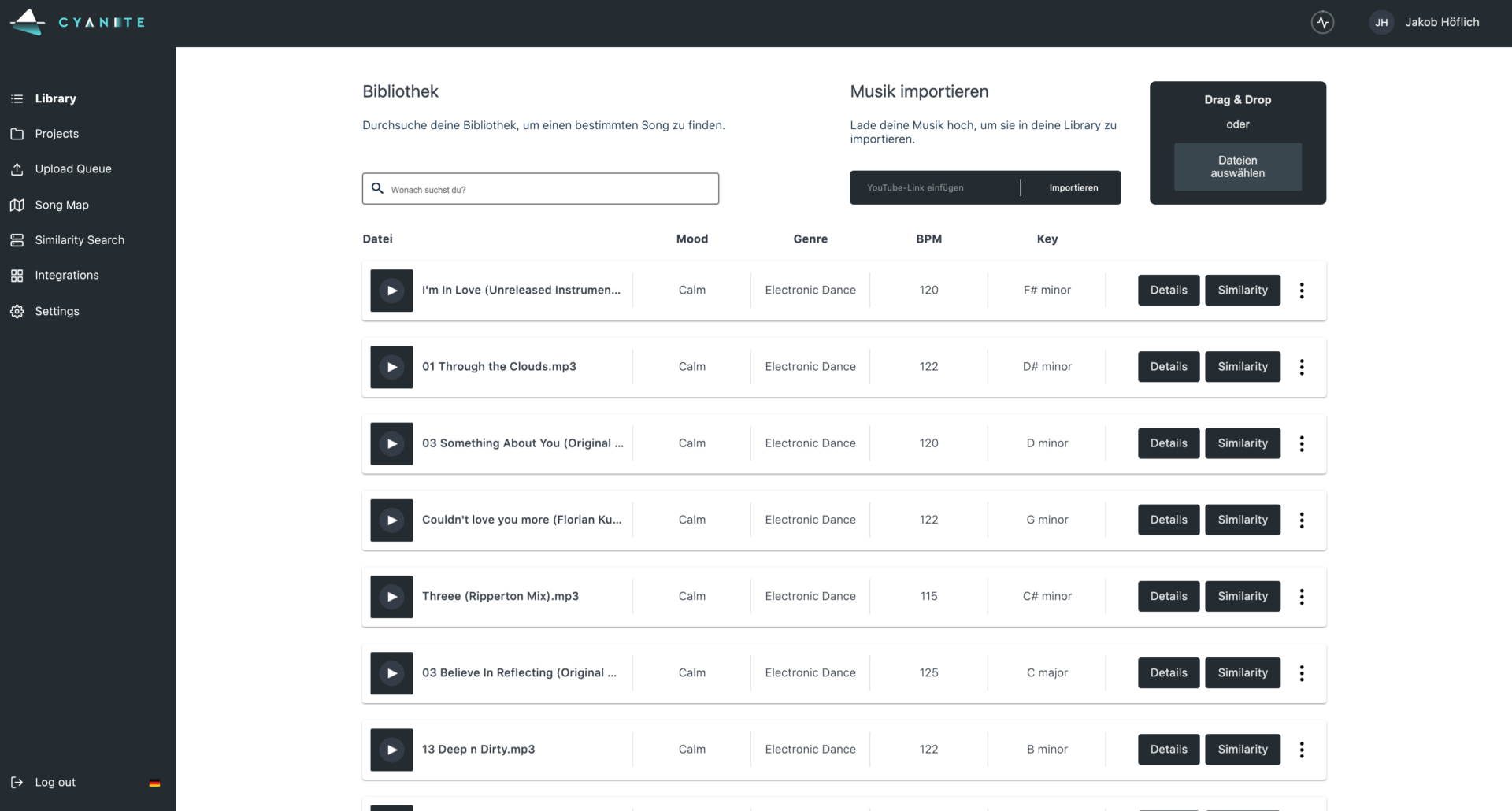
Neubau used our catalog management platform to automatically and consistently tag their entire catalog and establish acoustic similarities between tracks in their over 5,000 song catalog. No training or coding was required, and all Neubau staff can quickly and easily access their catalog for licensing purposes.

This is a screenshot of Cyanite’s library view which easily turns a catalogue into an accountable database

Results


+ Clean and consistently tagged catalog.
+ Estimated 80% faster response time to synch briefings.
+ Estimated 20% growth in synch deals.

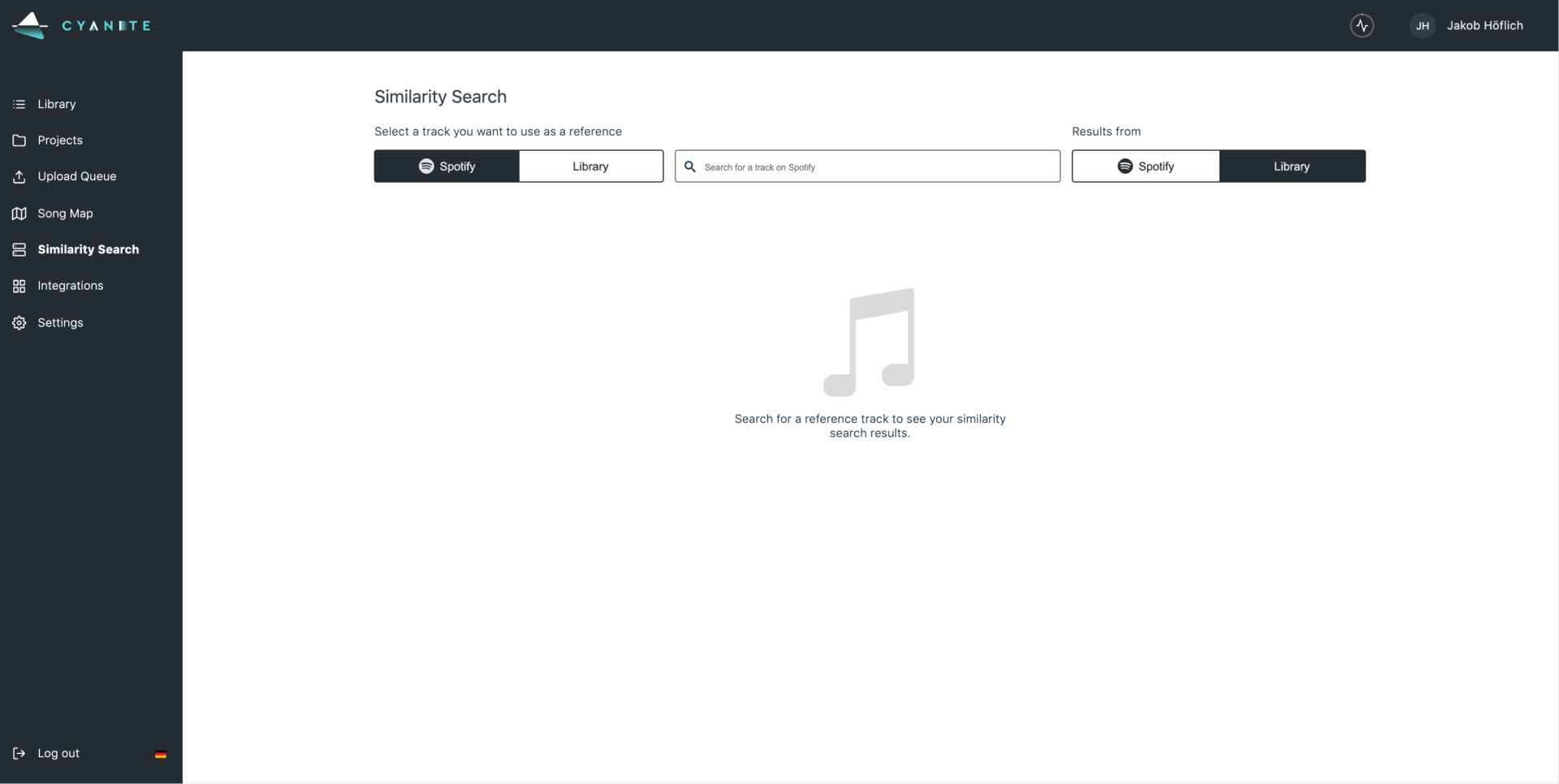
A screenshot of Cyanite’s Similarity Search that lets NEUBAU search their catalogue by own or reference tracks from Spotify in seconds.

Julian Butz

Julian Butz

Founder & CEO of NEUBAU Music

After different stations in the music business from publishing to label management, Julian co-founded NEUBAU Music in 2018. He is a well known voice in the German publishing industry and also a member of the VUT – Germany’s association of independent music business owners.

“As a young and forward-thinking label and publisher, it is key for us to represent the innovative mindset of our artists also in the business structures. To make the Cyanite AI an integral part of our workflows is also a sign to the industry that it is now time to embrace this new technology – and to learn to work with it.”

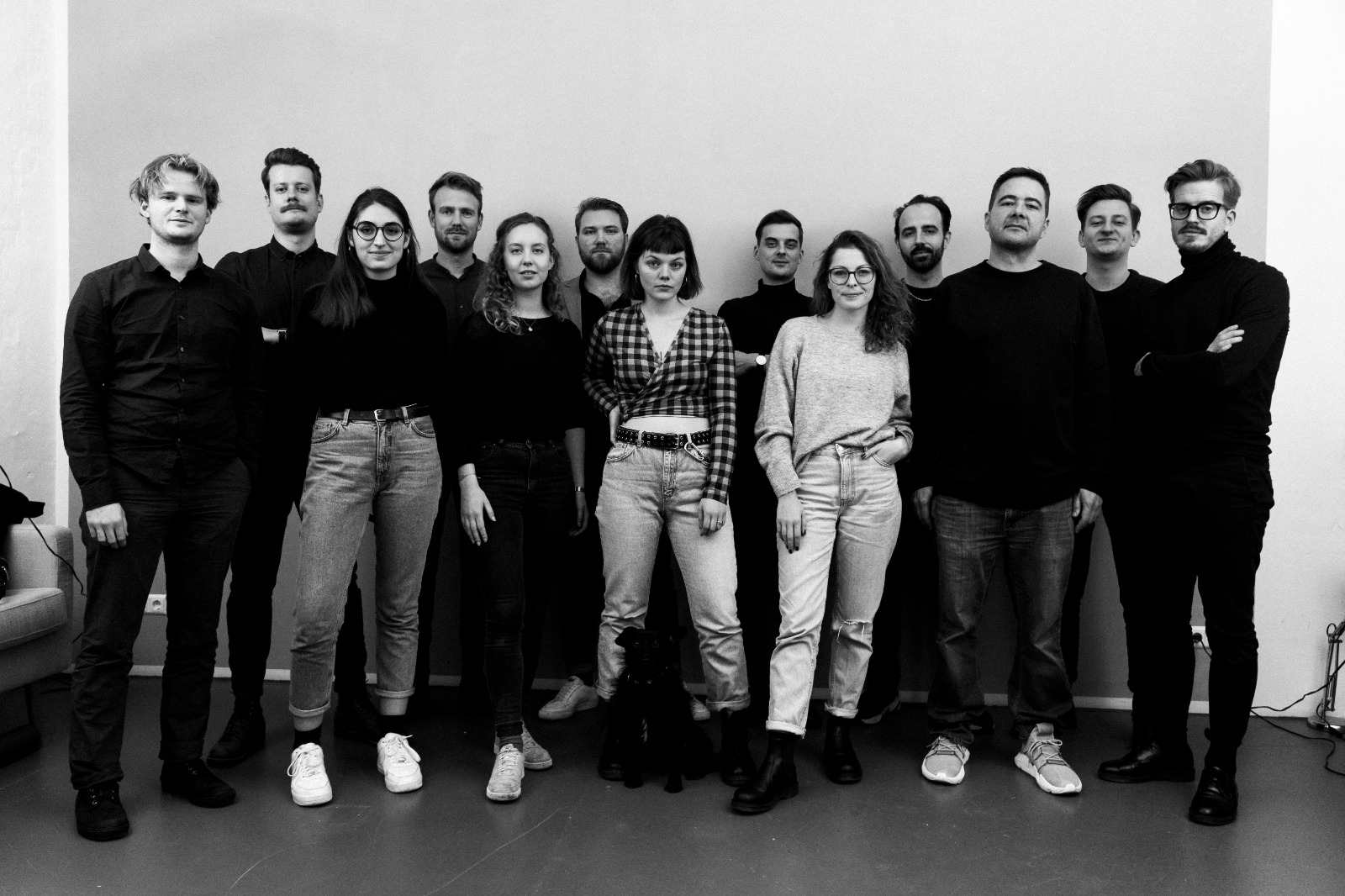
The whole team of NEUBAU Music

I want to apply AI to my catalogue as well – how can I get started?

Contact us with any questions about our frontend and API services via mail@cyanite.ai. You can also directly book a web session with Cyanite co-founder Markus here.

If you want to get a first grip on how Cyanite works, you can also register for our free web app to analyze music and try out similarity searches without any coding needed.

For more of our thoughts on how to turn your catalogue into a database with Artificial Intelligence and Music Catalogues, check these out:


Free white paper: 8 tips how to organize your music catalogue better

4 Technology Trends Music Catalogue Owners Need To Know

How to use the Cyanite API to analyze music on genre, mood, bpm, key and more