
AI Music Discovery: How Marmoset Uses Cyanite | A Case Study

AI Music Discovery: How Marmoset Uses Cyanite | A Case Study

Founded in 2010, Marmoset is a full-service music licensing agency representing hundreds of independent artists and labels. At the heart of it, their core experience involves browsing for music. They offer music discovery for any moving visual media. From sync (movies & TV) to advertisements, video games, and wedding videos.  Powered by Marmoset is Track Club, which is subscription-based as opposed to a la carte or custom licensing. Find out below how they use Cyanite for both of their services to amplify AI music discovery.

In 2019 Marmoset became the first Certified B Corporation music agency on the planet, providing tangible metrics, social sustainability, and fulfilling environmental standards.

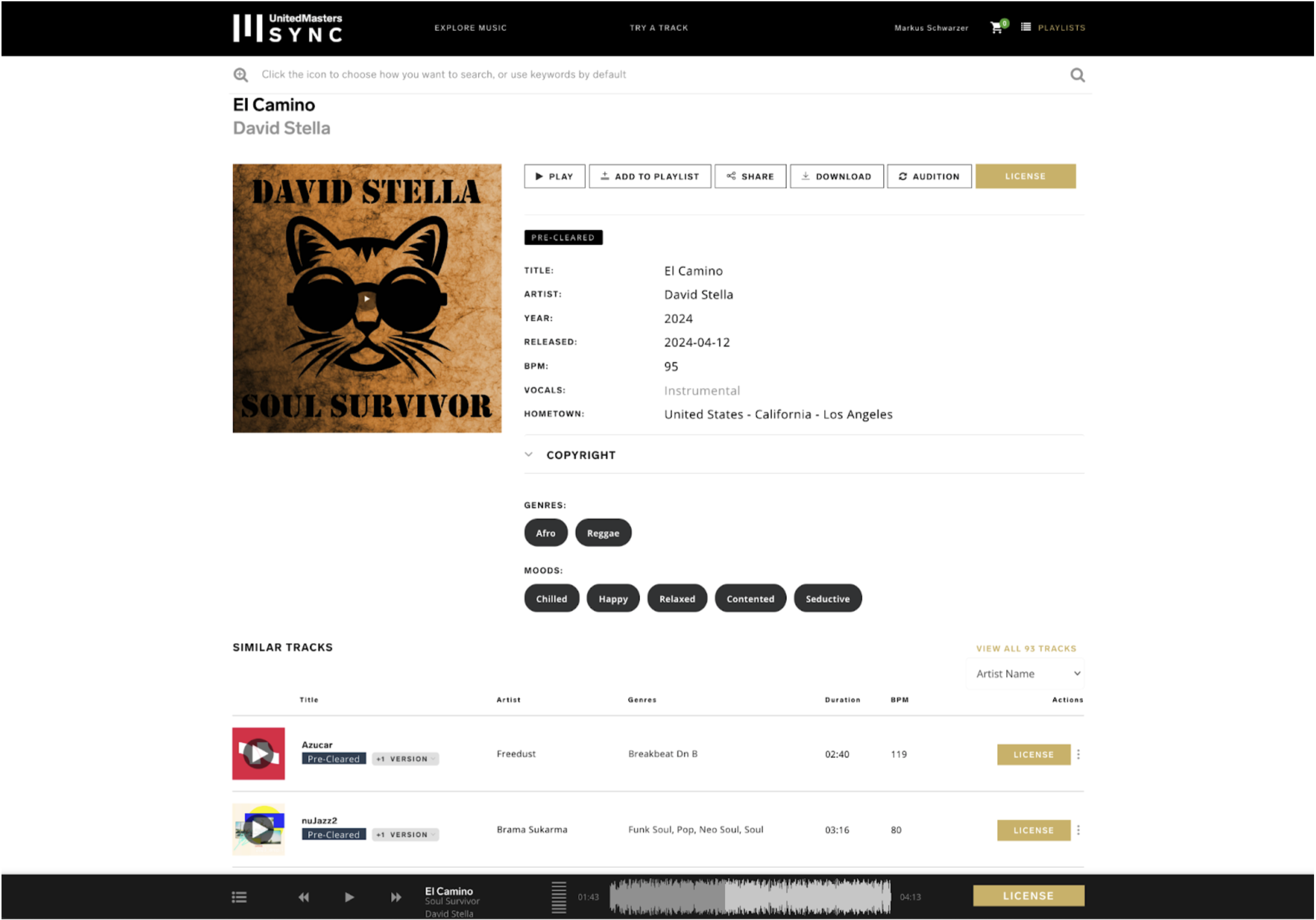
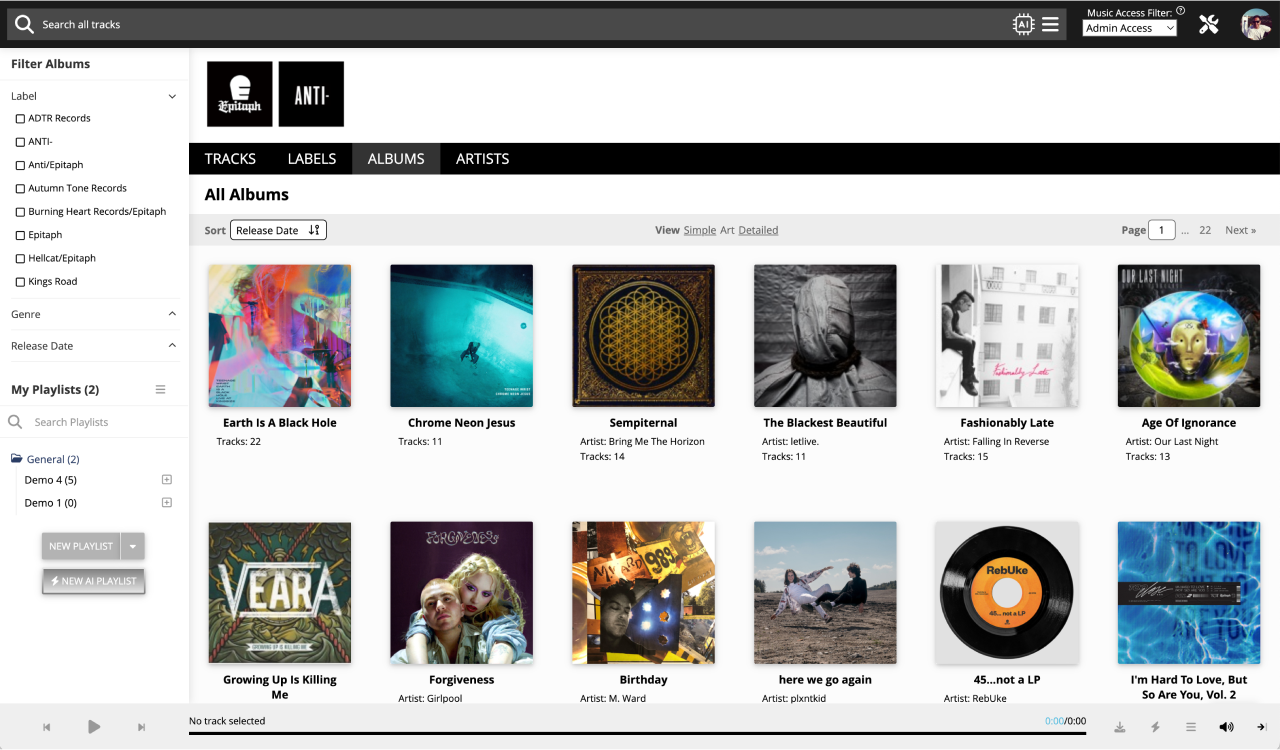
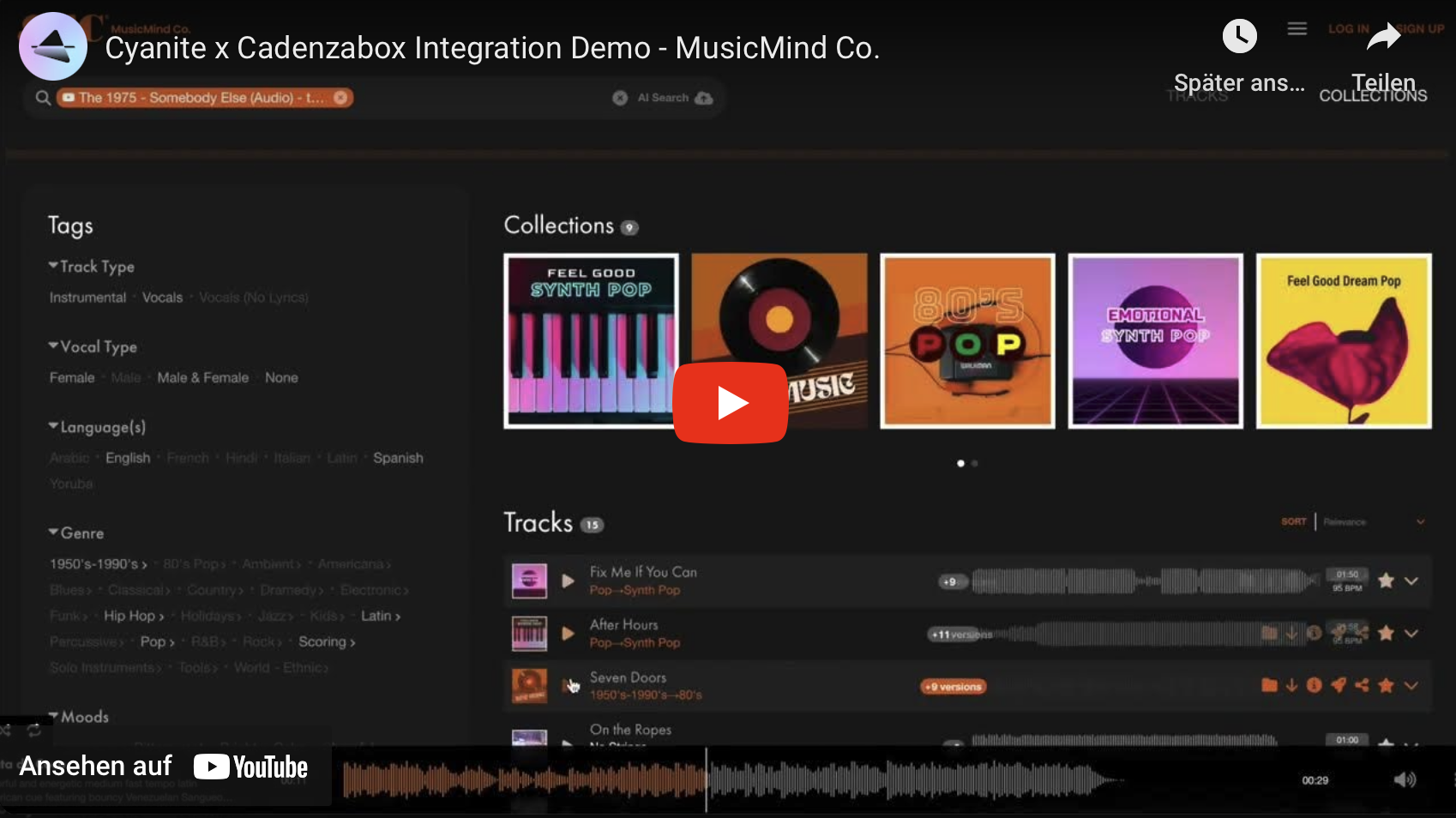
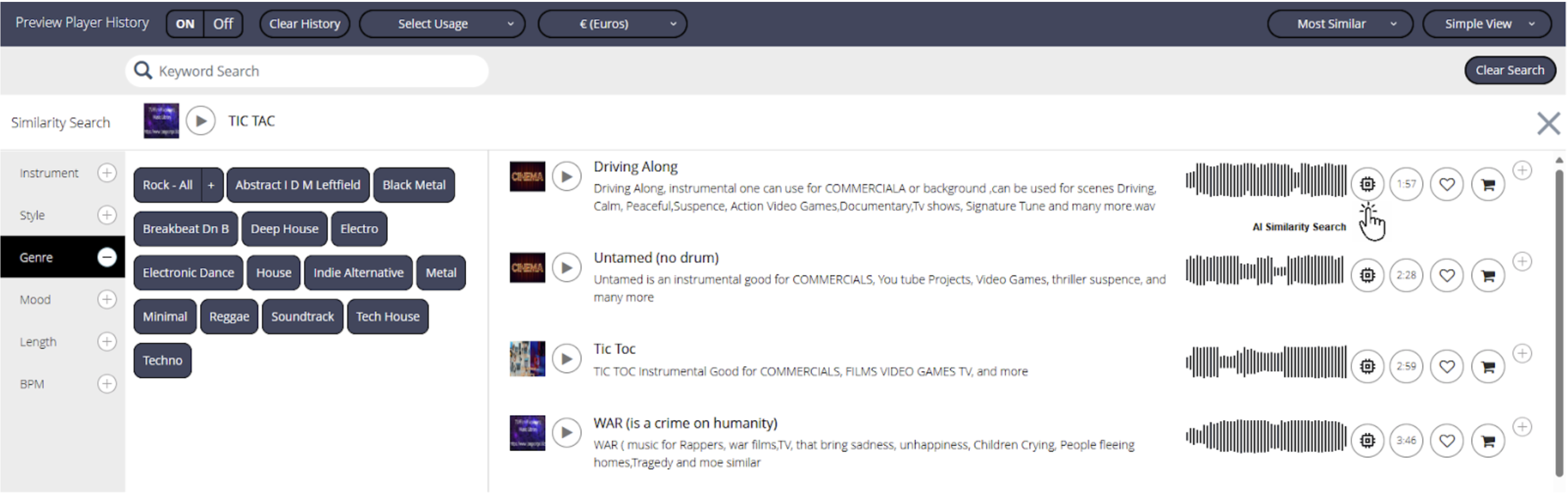
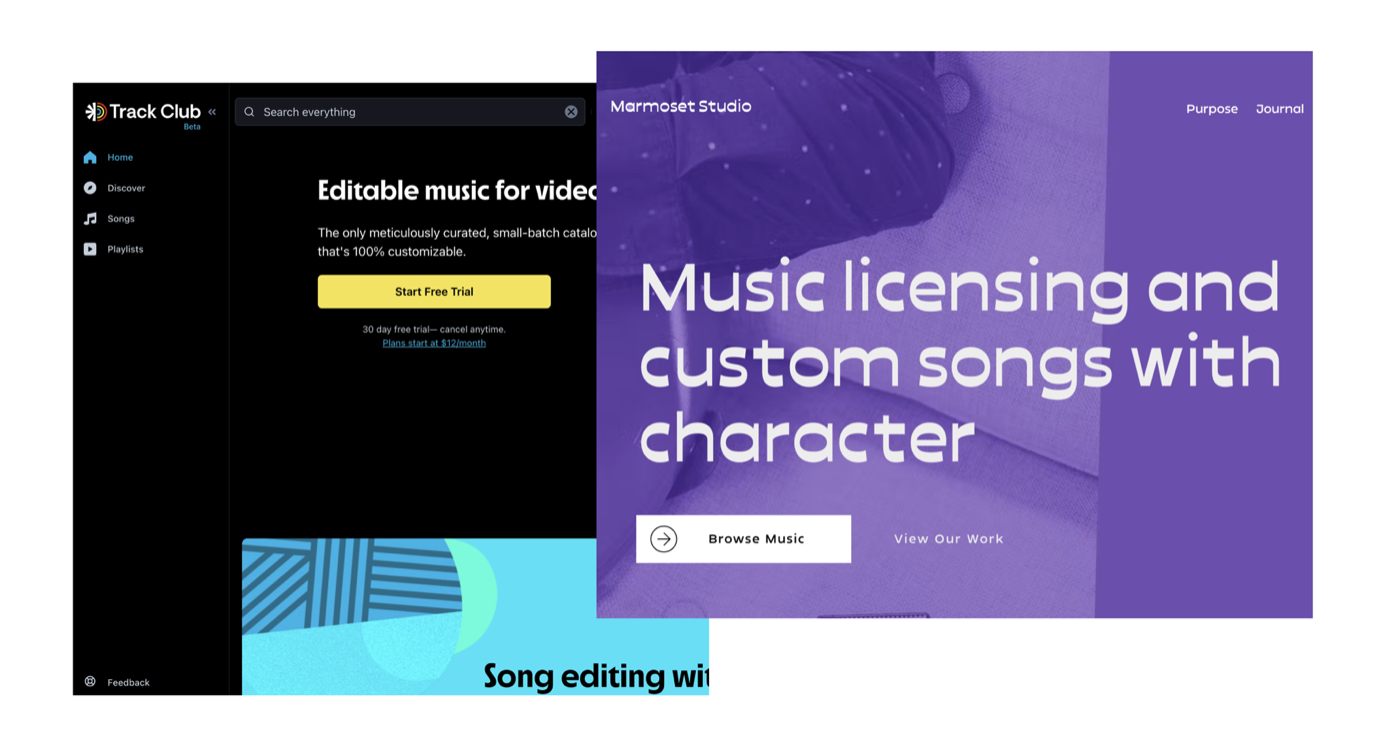
2 Screenshots of Marmoset Music and Tracklcub - both utilizing AI music discovery through Cyanite.
We sat down with Alex Paguirigan, product manager at Marmoset, to learn more about how Marmoset uses Cyanite both within their internal processes and on the front end of their services through AI music discovery and more. Cyanite and Marmoset have been working together for over 1.5 years now.

“We utilize Cyanite’s API and web app on a daily basis for auto-tagging, and similarity search.”

Alex Paguirigan

The Key Elements Within this Case Study

  • Challenges that Marmoset encountered before engaging with Cyanite.

  • Exploring the specific Cyanite solutions currently employed by Marmoset.

  • Understanding the benefits Marmoset derives from Cyanite’s AI solutions.

  • Delving into the integration process.

  • Marmoset’s future roadmap and strategic outlook.
A screenshot of a youtube video on how Marmoset uses Cyanite for AI music discovery with a middle aged man smiling.
Check out this 2-minute summary of our video interview.

“What made you initially reach out to us and how do you use Cyanite today?”

“Before I was a product manager, I had a catalog management position tagging music with metadata manually. Because of how subjective music is, we always wanted to make sure that a human was behind the wheel to attribute metadata.”

“But when it comes down to calculating the BPM and key of any given song, you would have to put someone behind a piano with a metronome, which is completely unsustainable and a strange use of labor. So that, plus the challenge of significantly growing our catalog told us – we are behind the times here.”

Initially, Marmoset was trying to improve and speed up their tagging process with Cyanite. 1.5 years later they ended up with much more than only a tagging solution. To make their catalog even more discoverable they integrated an additional solution powered by Cyanite: the Similarity Search

The Products that Marmoset Currently Uses

Web AppAllows you to upload your entire catalog into your Cyanite library, creating your own Spotify with our Similarity Search and Free Text Search. No coding required.

APILets you integrate Cyanite into your own system. Implement Cyanite’s full-scope analysis and search technology into your current environment! Coding skills required.

Auto-TaggingLet Cyanite tag your music with Genres, Moods, Keywords, Brand Values, Auto-Descriptions, and much more. Explore all the tags.

Similarity SearchGet similar songs recommended for either tracks from your library or external reference tracks from Spotify and YouTube. 

Using these in combination allows for superior AI music discovery.

How Marmoset Benefits from Cyanite – AI Music Discovery

[Click on any of the headings below to find out more about them.] 

Reduced search time for the right songs

“With this feature we allow our users to discover similar songs to the ones they think work best for their needs.”

We never want to be a site or a product that you spend hours of your day on. We would much rather you look through fewer things and get what you need within 10 minutes and never visit the site again because you already have exactly what you need. And this feature definitely helped with that.”

Faster song-to-market time

“Getting our artists onboarded faster with us quite literally has been a major benefit of integrating Cyanite.”

“Some artists and labels offer us their entire back-catalog dating back over 20 years. There’s only so much time in the day for a human to tag all of that and although we are still humanly involved in the tagging, Cyanite gives us a head start with this.”

“We don’t want to tell an artist ‘Hey, you’re gonna have to wait a bit because it takes time to tag your music and get it in the system.’”

AI music discovery with a consistent language across Marmoset's catalog

“Cyanite’s Auto Tagging makes our catalog more discoverable by people who are not you.”

“After I learned Marmoset’s internal tagging system and got a lot of practice with tagging the first 50-100 songs without any assistance, I suddenly developed my own system within a system. And I stuck with that.

When you’re tagging the music with the help of Cyanite, it forces the person behind the computer to reconsider what they hear.”

“On the worst days, that means you are questioning your musical knowledge. But on most days, Cyanite hears something that you don’t, and you expand your knowledge of music because you reconsider your judgment call. Or it gives out the exact tags that you thought of before and simply reassures you in your confidence.”

“And that only makes our catalog stronger.”

“Someone in Germany may have a very different definition of confidence, so it allows us again to close that gap of mistranslation or misunderstanding between people who may come from completely different cultural backgrounds, but still need to get their confident song into their Instagram Reel for 2024.”

Want to know what tags we are talking about? Check out our full tagging taxonomy here.

Exploitation of hidden and unknown parts of the catalog

“Cyanite has maybe most significantly improved our work, with its Similarity Search that allows us to enhance our searches objectively, melting away biases and subjective blind spots that humans naturally have.”

When getting a brief like ‘sunny and happy, with an acoustic guitar, piano, et cetera, et cetera’ we are talking about tens of thousands of possibilities here. Plus sometimes you only have half an hour to answer that brief.”

“While our catalog and search team are very well versed in our catalog, they naturally have their own internal biases and favorites—after all, that’s human. Cyanite adds some objectivity to that.” 

As Jakob, one of our founders would say: “The AI doesn’t care if you’re Ed Sheeran or a bedroom producer. If your track fits the reference, it will surface it.”

Using Spotify & YouTube references to answer briefs

“With other types of briefs such as Hey, this is what the head of music at McDonald’s loves but we can’t afford this song.’, using external reference tracks from Spotify or Youtube to find similar-sounding tracks in our catalog made things very easy for us.”

Increasing fair treatment of artists

“Using Cyanite we provided a more fair game for our artists to play. At the end of the day, that means more money in their pockets.”

“The moment we press ‘show similar songs’, the AI gives chances to people who may not have had the benefit of having that one crucial tag that would have surfaced their song to the top of our browse experience.”

“Maybe we’ve missed that when we tagged it back in 2016. Cyanite doesn’t care about that. Cyanite just says ‘This is a pretty good track based on what you’ve liked so far.’”

This way all artists benefit from AI Music Discovery.

Faster onboarding of new team members.

“What has been integral in onboarding new staff members, is allowing them to have a more organic discovery experience, because of the Similarity Search. Whether it was uploaded yesterday or uploaded 10 years ago, they’re gonna find it more easily.”

How Long did the Integration Take?

“Markus and Joshua were fantastic partners. Overall it took a few months to launch the ‘show similar songs’ button. But to be fair…could it have taken a shorter amount of time? Absolutely.”

“We did it in a very careful and methodical way. We put Cyanite under quite a serious magnifying glass, before committing and giving it out to our users.”

Check out the API docs to learn more about the process of integrating Cyanite into your system. 

Where Is Marmoset Heading With All This?

“We are in a transitional period and we’re going to be considering full auto-tagging. There also always will be a human verification step, so it will always remain a human process. Compared to how we do things now, the idea is that Cyanite fits in a little earlier in the process as opposed to later.”

“We will start trying to find creative ways to utilize what is ultimately a very robust, very flexible amount of metadata not just to our benefit, but of course, to our end users’ benefit so that they can find the music they want faster.”

Marmoset AI Music Discovery – Long Story Short

Marmosets’ seamless integration of Cyanite into their workflow demonstrates the transformative impact of technology on the music industry – both facing the user front-end as well as internally improving workflows.
Combining trust in human processes and cutting-edge AI, Marmoset continues to define the future of music and AI music discovery.

Interested in trying out Cyanite for your company? Get in touch with us, or click the sign-up button below.

Many thanks to Alex Paguirigan for providing these amazing insights about how Marmoset uses Cyanite!

Sonu x Cyanite: Streaming Service Integrates AI-prompted Playlists

Sonu x Cyanite: Streaming Service Integrates AI-prompted Playlists

Music streaming platform Sonu has partnered with AI-powered music tagging and search company Cyanite to introduce VibeCheck, a fresh feature for listeners to generate playlists tailored to any desired mood, setting or situation.

Fair Music Streaming – What is Sonu?

Co-founded by producer TOKiMONSTA, Sonu’s vision is a music industry that’s more equitable and rewarding for both fans and artists. This starts with sonu.stream, a music streaming service that combines ad-free streaming with a marketplace for artists to auction one-of-a-kind digital twins of their songs and enjoy direct support from their biggest fans. Read more here.


A Collaboration to Create Music Moments

We partnered with Sonu, delivering the tech solution for “VibeCheck”. A fresh feature for listeners to generate playlists tailored to any desired mood, setting, or situation.

AI Playlists – Listeners simply enter a vibe, such as “cozy music for a rainy Sunday with my dog on the couch,” or “Friday night dinner party,” and are instantly provided with a playlist tailored to that specific moment.
The prompts can also help listeners find music that’s similar to their favorite artists, tracks, or albums, deepening discovery across Sonu’s music catalog. 

A New Form of Music Recommendation

The result is a more immersive and personalized listening experience for users, without interference from editorial playlisting that often prioritizes a platform’s commercial considerations over a neutral recommendation engine.

“There’s just so much music available at our fingertips. Our collaboration with Cyanite is a significant step towards improving music discoverability and broadening horizons for fans. We built VibeCheck as a more fun interface for browsing music in this age of abundance. The goal is a playlisting experience that encourages a ‘lean in’ experience that feels a bit like crate digging in the age of AI.”

– Laura Jaramillo, CEO at Sonu

How it’s done

Cyanite leverages its advanced music analysis and AI recommendation solutions to enhance discoverability – a perfect companion for a music streaming service that prioritizes personal curation over algorithms.

The AI playlists are powered by our Free Text Search, as well as our Similarity Search, with some tweaking here and there we gave Sonu all the tools necessary for this exciting new way of discovering music. 

“Music should match our moments. It’s the soundtrack to life. So it’s especially meaningful when we surface tracks from emerging artists that may have difficulty breaking through the commercial playlist firewall. This is another step towards our vision of fair music streaming for all.”

– Laura Jaramillo, CEO at Sonu

VibeCheck is live now at app.sonu.stream. Sonu launched its beta streaming service in December 2023 and is available in the U.S. only, with plans to expand to Europe soon.

In the meantime, you can experiment with our Free Text Search and Similarity Search in our free web app here.

Interested in integrating Cyanite into your Platform? Send us an email to business@cyanite.ai and we’ll find out how we can help with your vision.


Your Cyanite Team

Video Interview: How DJs, Artists, and Labels Can Use Cyanite’s AI

Video Interview: How DJs, Artists, and Labels Can Use Cyanite’s AI

Managing Music Catalogs with Cyanite

Following up on our presentation at Music Tech Germany, we recently did an Interview with Berlin House Music, discussing what tools we offer the music community here at Cyanite through our Web App

We summarized the most important topics to provide you with a short overview of what we talked about. Scroll down to check out the full 13-minute interview on YouTube.

Features for DJs, Artists, Labels:

    • Cyanite aims to empower DJs by assisting in set-building and suggesting tracks based on energy levels and various tags.
    • DJ features include a similarity search where users can find tracks with a similar vibe.
    • Using the Camelot wheel for harmonic mixing

Promotion Tools:

  • Labels and agencies use Cyanite for categorizing new music, finding suitable songs, and making product decisions.
  • Cyanite helps in selecting preview sections for music distribution to platforms like TikTok.
  • Users have successfully used Cyanite’s Augmented Keywords to instruct ChatGPT-3 in generating detailed song descriptions.

To find out more about this read our how-to blog article about it here.

Playlist Matching Feature (BETA):

    • Cyanite has just released a BETA feature to recommend playlists on Spotify that match a user’s uploaded song.
    • Future plans include recommending DJ crates and suggesting where in a playlist a song should be placed


Curious? Click here or on the video embedding above to watch the full interview on Berlin House Music’s Channel. 

In case you don’t have a Cyanite account yet, click the button below to Sign Up for free!

The Future Of Catalog Management: A Rep(e)rtoir Revolution

The Future Of Catalog Management: A Rep(e)rtoir Revolution

Managing Music Catalogs with Cyanite

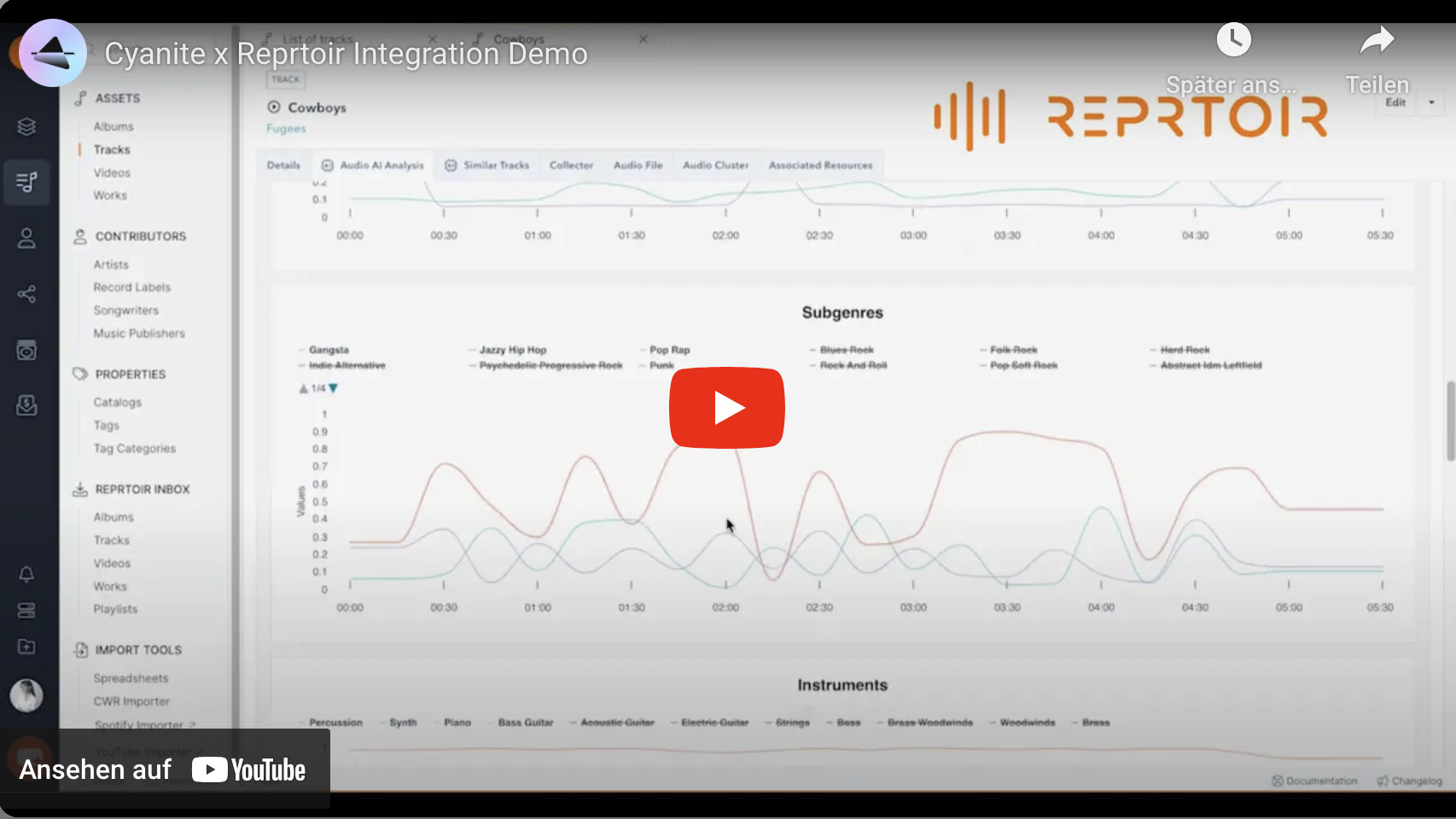
In a recent panel discussion hosted by Digital Music News and Reprtoir, industry experts, including Cyanite’s co-founder & CEO Markus Schwarzer, discussed the challenges that music professionals encounter in effectively managing music catalogs and assets.

We summed up the most important points from the over 1-hour long panel talk for you below.

The Issue with Subjective Metadata 

Juvenal Juarez from Gerencia 360 mentioned the difficulty music companies encounter in comprehensively knowing their entire catalog. This challenge is further complicated by the subjective nature of metadata tagging in music, where subjective interpretation often prevails. To tackle this, Danny Dunlap from Beacon Street Studios pointed out the advantage of leveraging AI-powered tools like Cyanite and Reprtoir to introduce a level of standardization, removing subjectivity from metadata tagging.

Shifting Power in the Industry

The incorporation of Cyanite in catalog management, as expressed by Markus from Cyanite, is transforming how professionals interact with their catalogs. The goal is to make catalog value accessible to all, not just large companies with massive resources. Lara Angelil from Reprtoir then emphasized that anyone can now harness their catalog’s potential without years of study.

Additionally, with our Free Text Search, we allow users to articulate their preferences in natural language and receive personalized recommendations. This aligns with the current demands of the industry, particularly in the realm of sync, where Cyanite helps to find the perfect track for any occasion.

A peek into the Future

Later in the panel, there was a focus on AI’s role in predicting trends and its potential impact on the discoverability of new artists. As the industry grapples with an influx of data and metadata, concerns about managing this information effectively are growing with it. Lara Angelil addressed these concerns, pointing out that scalability and the right tools, such as Reprtoir, which uses Cyanite, enable professionals to navigate the increasing volume of information and maintain transparency.


For a more in-depth exploration, feel free to check out the panel discussion replay here.
How to Use AI Music Search for Your Music Catalog

How to Use AI Music Search for Your Music Catalog

Ready to level up your search workflows? Try AI-powered music search in Cyanite.

Even the most carefully organized catalog reaches a point where text metadata can no longer support effective search on its own. Genres blur, moods can overlap, and large libraries hold thousands of tracks that look similar on paper but sound different when you listen. When you’re working on a brief, your search method needs to reflect the sound itself—not just the words attached to it.

AI music search enables your catalog to reveal more. By working with audio alongside the metadata, it returns search results that match the intent behind a brief rather than the exact words used in a query. You get a shortlist faster and surface strong tracks that would otherwise stay buried.

We see this need showing up across the catalogs we serve, so we put together this guide to outline how AI music search works in Cyanite and how it supports faster, more intuitive discovery in real-world workflows.

Learn more: See how AI music tagging works in Cyanite and how it supports large catalogs.

What is AI music search?

Traditional catalog search depends heavily on how consistently tracks are described. It works well when metadata is uniform and when everyone searches in the same way. But this is rarely the case in practice. Different people use different language, and many musical qualities are easier to hear than to articulate precisely.

AI music search approaches the problem by analysing the sound itself. This allows the system to understand rhythm, harmony, instrumentation, intensity, and voice presence. These sonic attributes are then used alongside existing metadata to guide search results.

Instead of matching exact keywords, the system focuses on musical similarity and intent. That means you can start a search from a reference track or a descriptive sentence without losing nuance along the way.

AI music search does not replace structured tagging. Instead, it builds on it as an additional way to explore a catalog when sound, context, or creative intent are easier to hear than describe.

At the same time, well-structured tagging remains the baseline to navigate a catalog in many day-to-day scenarios. AI-driven search becomes most valuable when teams need to move beyond fixed labels or explore music from a different angle.

How different types of AI music search work together

In practice, AI music search is most effective when it supports multiple ways of thinking about music. These are three ways we enable catalog music search in Cyanite:

  1. Audio-based search
  2. Prompt-based search
  3. Customizable advanced search features

These tools are designed to work together. Audio gives a clear view of how a track moves, text helps describe what you’re looking for, and advanced filters narrow the field to traits that matter for the request. Using them together keeps the catalog flexible and reduces the chance of great tracks being missed.

Exploring your catalog through Similarity Search

Similarity Search starts from sound. Cyanite analyzes a reference track’s audio and compares it with the rest of your catalog, returning tracks with a similar shape or mood. 

The reference can come from within your library or from an external source, such as Spotify, YouTube, or an uploaded audio file. You can also choose which part of the reference track to use, such as the chorus, the intro, or a specific section that best represents the desired direction.

This approach is especially useful when a brief comes with a musical example rather than a written description. Instead of translating sound into words and back again, you can search directly from what you hear. If you work with multiple reference tracks or an entire playlist, the Advanced Search features below are here to help.

Read more: Similar song finder AI for catalogs: Use Cyanite to search your library by sound

Searching with language using Free Text Search

Not every search starts with a reference track. Free Text Search allows users to describe music in natural language, using full sentences rather than rigid keywords.  

Prompts can reference mood, pacing, instrumentation, scene context, or use case. They can also include cultural references and be written in different languages. The system interprets the prompt’s meaning and matches it against the audio-based understanding of the catalog, without relying on external language models.

This makes search accessible to a wider range of users, including those who may not be familiar with a catalog’s internal tagging conventions.

Read more: How to prompt: the guide to using Cyanite’s Free Text Search

Advanced Search

For more specific searches, you often need additional control. Advanced Search builds on Similarity and Free Text Search by adding structured filters and deeper insight into why tracks appear in the results.

This mode allows teams to:

  • View similarity scores that show how closely results align with a reference or prompt
  • Run similarity searches using up to 50 reference tracks at once
  • Upload custom metadata and use it as additional filters
  • Identify the most similar segments within each track

Testing Advanced Search free for a month gave us the confidence we needed to update our search and tagging systems. The integration was smooth, and we were able to ship several exciting features right away—but we’ve only scratched the surface of its full capabilities!” Jack Whitis, CEO at Wavmaker

Read more: How to level up your AI search with Advanced Search features

AI music search: build vs buy

Organizations considering AI search often decide based on whether they want to build internally or integrate an existing solution. It typically depends on the time, cost, and ongoing work you can take on.

Building an in-house system can make sense for teams with significant machine-learning expertise and long-term resources. It typically requires a dedicated engineering team, a large and well-structured training dataset, and ongoing investment to maintain and improve model quality as catalogs and user needs evolve.

However, for most catalogs, integrating a tested system is the more practical path. Cyanite offers AI music search through a web app, an API, and integrations with major catalog management systems. Teams can adopt advanced search capabilities without taking on the long-term cost and complexity of maintaining their own models.

Smaller teams can start with the web app and scale usage over time. Larger organizations can integrate search directly into their own platforms, with pricing that aligns more predictably with catalog size.

Cyanite’s approach to AI music search

Cyanite is built to help teams understand their catalog through sound. We bring audio, language, and filters into one place so you can move through briefs without switching tools.

Audio-first analysis

Cyanite listens to the full track from beginning to end and captures how it develops in instrumentation, energy, and mood. This audio-first approach drives Similarity Search, Free Text Search, and Advanced Search. Because the focus stays on the audio rather than popularity and text-only metadata, you reach tracks that often get overlooked.

Data security and model ownership

Your audio remains within Cyanite’s environment.

  • Audio analysis and search models are built and maintained in-house.
  • No files are sent to external AI providers.
  • All processing meets GDPR requirements.

Teams with specific copyright needs can use upload workflows specifically designed for internal and client-facing work.

Built for catalog scale

Full tracks are analysed in depth, with thousands of sonic details compared. This means large libraries can be processed quickly without search performance slowing as the catalog grows. Search performance remains steady at high volume, which makes it easier to bring new material into the library without disrupting ongoing work. 

Search that adapts to the workflow

Similarity Search, Free Text Search, and Advanced Search all draw from the same audio analysis, which makes it easy to move between a reference track, a written prompt, or a set of filters in a single workflow. Advanced Search adds scoring and segment highlights when you need more context, while the other modes help you move quickly through creative requests. Together, these tools support different working styles and keep results consistent across teams and briefs.

Try AI music recognition with your own tracks

AI music search helps catalogs stay workable as they grow. By reading the audio and supporting both reference-based and prompt-based queries, it reduces search time and brings more of the catalog into play.

Want to see how this works with your own tracks? You can test Similarity Search and Free Text Search in the web app, or explore Advanced Search through the API.

FAQs – API Integration

Q: How does AI music recognition work in a catalog?

A: AI music recognition interprets patterns in the audio and compares them across the catalog. This reduces reliance on metadata wording and supports searches that begin with a reference track or a natural-language prompt.

Q: Is Cyanite the same as an AI music finder or consumer music search engine?

A: No. Consumer-facing music search and recommendation systems are typically driven by listening behavior and user interaction data. Cyanite focuses on sound-based analysis and metadata, making it suitable for professional catalog search, editorial workflows, and internal systems.

Streaming platforms use Cyanite to complement behavioral data with objective audio understanding, especially for catalog organization, discovery, and editorial use cases.

Q: Can Cyanite be used in my CMS for music?

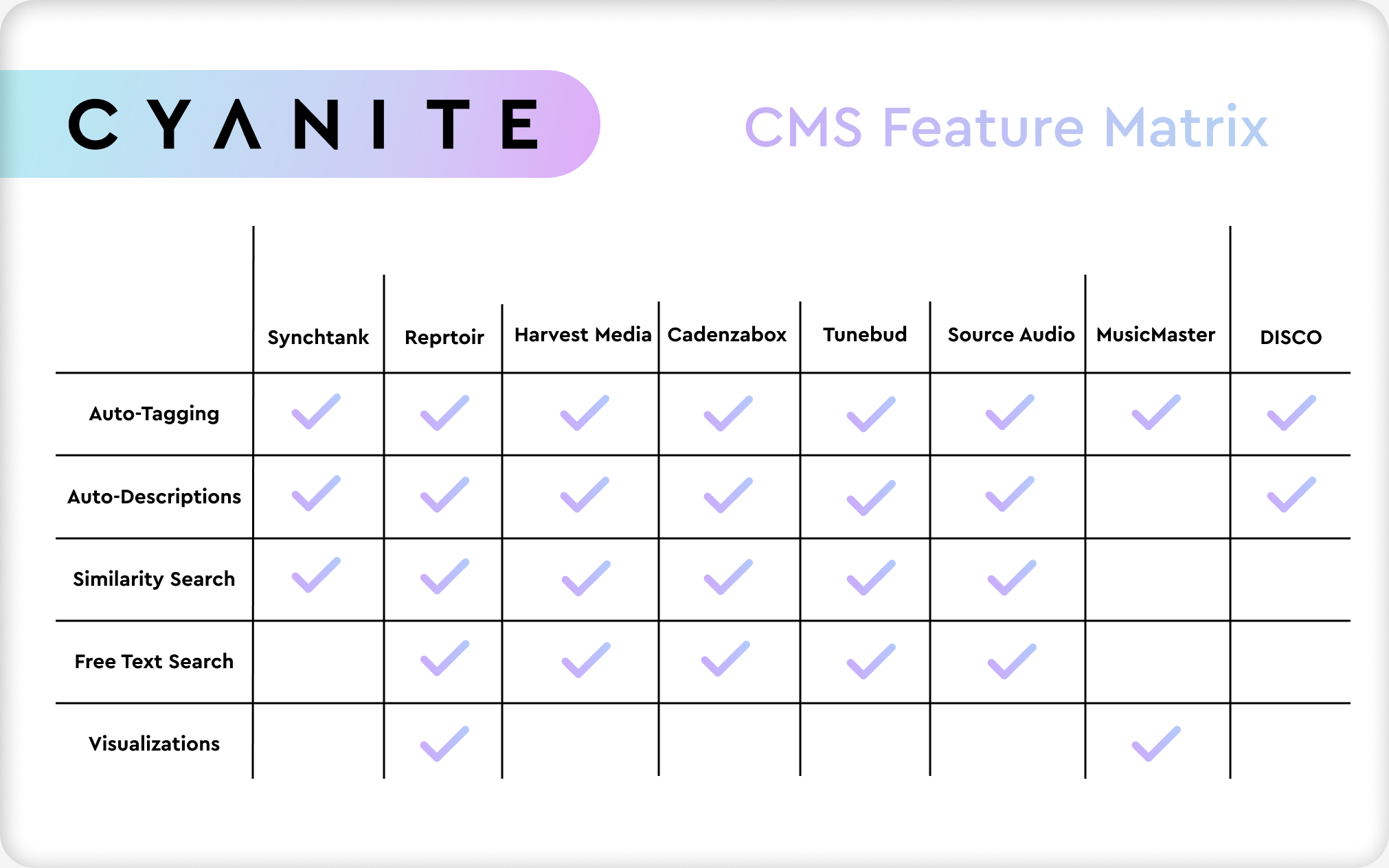
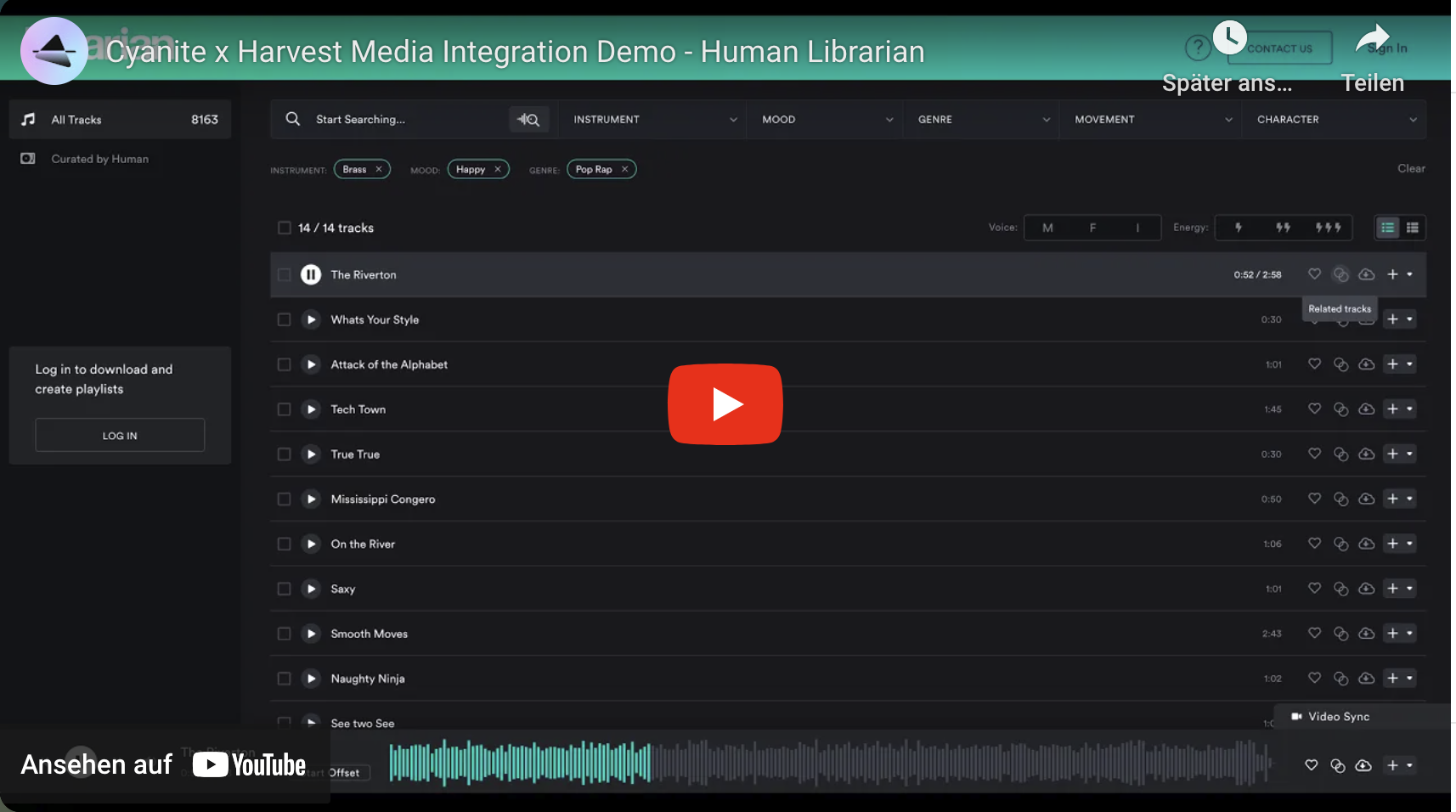
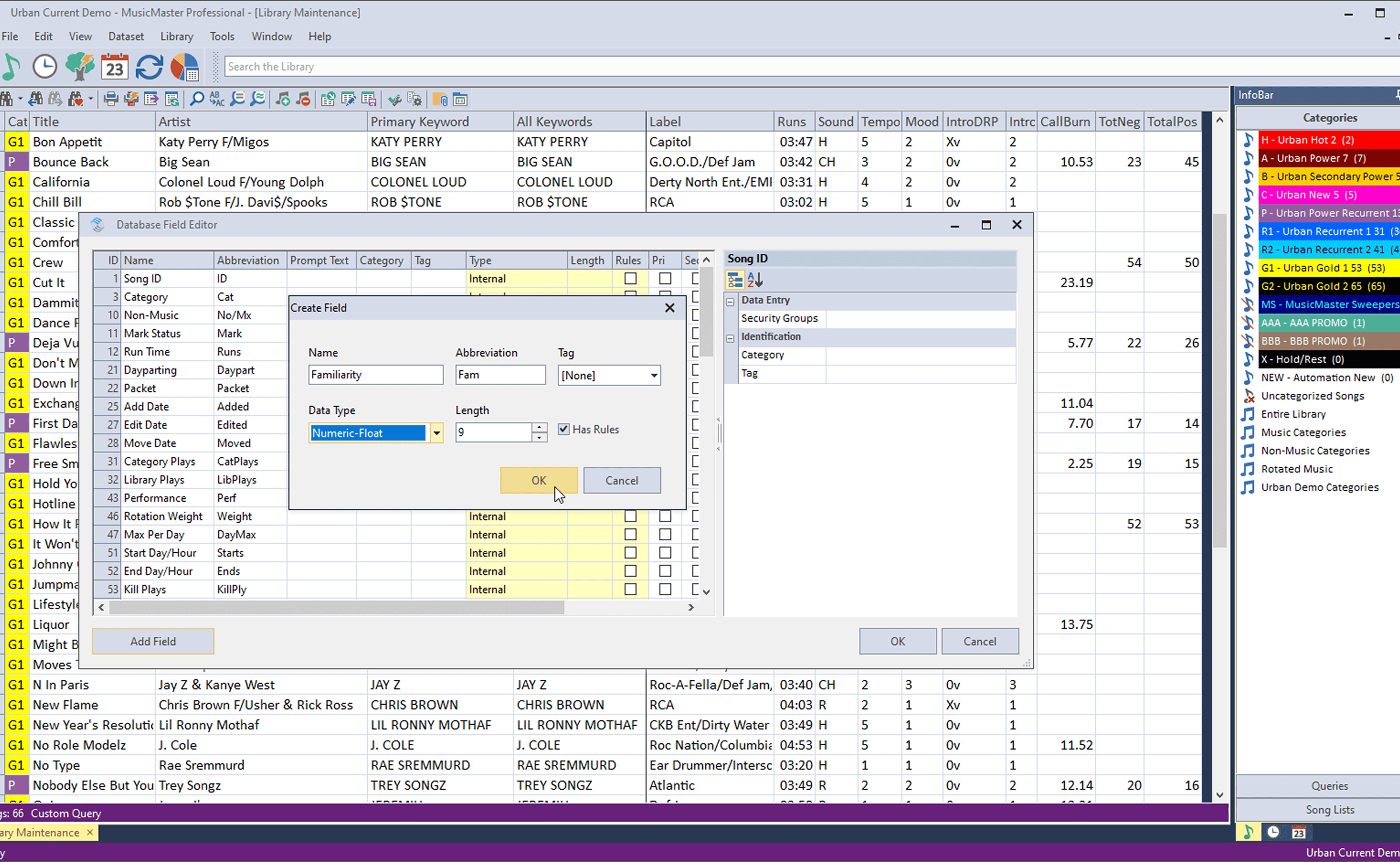
Cyanite is fully integrated with SourceAudio, Cadenzabox, Harvest Media, Music Master, Reprtoir, Synchtank, and TuneBud. DISCO users can also import Cyanite’s Auto-Tagging and Auto-Descriptions into their libraries. These integrations support a wide range of Cyanite use cases across catalog management systems.

Q: Who uses Cyanite?

A: Music publishers, production libraries, sync teams, audio branding agencies, and music-tech platforms use Cyanite for tagging, search, playlist building, onboarding, and catalog analysis. Artists and producers use the web app for fast tagging and discovery.

Q: Can I integrate AI search into my own platform?

A: Yes. The API supports Similarity Search, Free Text Search, Advanced Search, and audio analysis, making it possible to add AI-powered discovery directly into your product.

Find The Right Playlists for Your Music on Spotify – Free BETA

Find The Right Playlists for Your Music on Spotify – Free BETA

Playlist Matching – Free BETA

With over 4 billion Spotify playlists, finding the right playlists for your music is not easy. With our new feature we focused on promotion – more specifically on pitching songs to DSP playlists, helping you to pick the right ones.

Introducing: Playlist Matching – find the right playlists for your music in seconds.

We’re here to help.

In 2018 Spotify opened up its gates to Artists, Managers, Labels, etc. to pitch their songs directly to curated playlists. This was a huge step towards making song promotion more accessible. But as always accessibility also means competition.

If you are curious about how to write the perfect pitch for your music, check out this blog post here.

Our new Playlist Matching tool will help you narrow down your choices as well as present you with suggestions that you probably would have missed out on due to the sheer mass of playlists out there.

How does it work?

First, you upload your track to your Cyanite account. The song now gets analyzed and tagged with metadata such as genre, mood, energy, character, and many more.

Then you head over to the Playlist Matching tab on the sidebar menu. Next, select your song, and in the blink of an eye, 10 playlists that match the essence of your song will pop up below. 

Start finding the right playlists for your music.

New technology is often gatekept and only tested by selected people until it is perfected and rolled out to a wider community. We decided to do the exact opposite.

Discover the Right Spotify Playlists Faster

Get ten playlist matches per song and use that information to pitch your music to the curators (you can find out who is behind the playlist by clicking on the name next to the playlist image on Spotify. Then get in touch via social media). 

Find Your Target Audience, Fellow Artists, and Inspiration

With Cyanite Playlist Matching you can better identify the musical bubbles your music resonates with. Great for playlist marketing, artist collaborations, or getting inspiration for your next hit. 

Explore New Music Through the World of Playlists

Use your favorite tracks and discover new music in Spotify’s treasure trove of human-curated playlists.

The free BETA is open now. 

If you do not have an account yet, sign up for free down below and start now. Our company is made by music lovers for music lovers. We want to grow with you – so as long as your feedback is constructive, we want to hear it.

Help us help you to find the right playlists for your music and improve our services for you. Become a part of the journey.

Your Cyanite Team.