AI-Powered Music Marketing feat. Chromatic Talents

AI-Powered Music Marketing feat. Chromatic Talents

Chromatic Talents acts like a music brand consultancy providing a comprehensive range of services in artist management, development, digital branding, and business development. Find out how they use AI-Powered Music Marketing powered by Cyanite.

The goal of the Germany-based consultancy is to empower artists and brands to achieve their vision, serving a diverse clientele in the music industry, including newcomers, established artists, labels, and more. 

A recent success story was a collaboration with UK label C2 to market Matt Sassari’s “Give It To Me”. The song has been streamed over 300 million times.  You can find out more about Chromatic Talents here: https://chromatictalents.com/ 

Chromatic Talents Team

Chromatic Talents’ Team

We sat together with Julia and Simon from Chromatic Talents who have been using Cyanite since the beginning of 2023 and wanted to find out more about how exactly they use Cyanite to support their daily work with AI-Powered Music Marketing.

The key areas are:

  • Automatic categorization of demos
  • Pre-selecting songs for songwriter and sync-briefs
  • Using Cyanite for TikTok pitches
  • Data-driven decision-making in product management

Read the full interview below.

Cyanite: What made you initially reach out to us and how do you use Cyanite today?

Julia: We realized the importance of streamlining our demo categorization in our publishing service, particularly for international song pitches. The extensive music catalog we had, posed a challenge in terms of manual tagging and search efforts. We came across Cyanite’s analysis and automated tagging solution after the partnership announcement with BMG and it proved to be a game-changer in efficiently pinpointing the right songs.

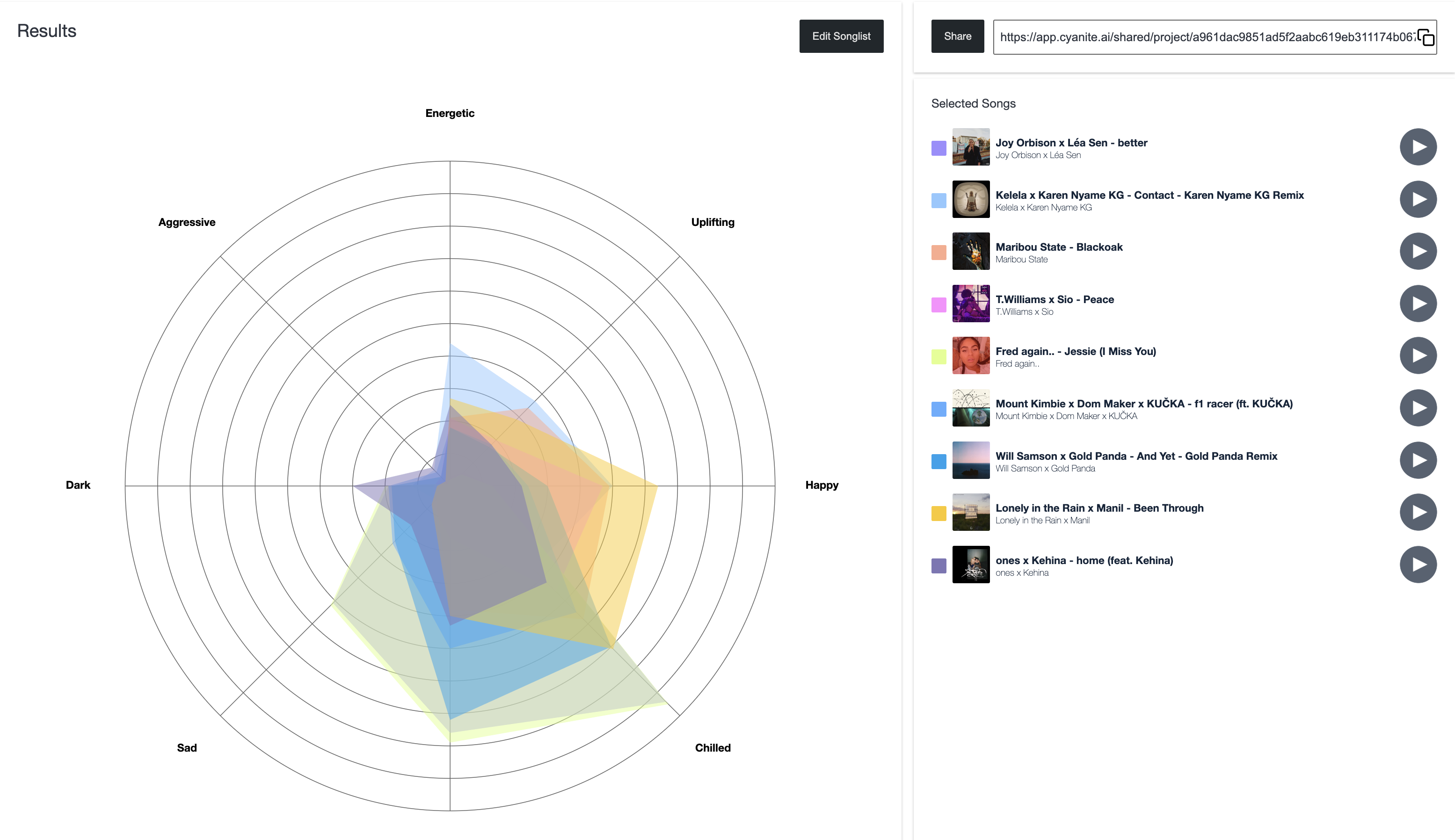
Simon: In addition to improving our publishing service, we use Cyanite’s AI for our product management, specifically for Spotify pitches.  We conduct in-depth song analysis and employ Cyanite’s Track-mood analysis to curate mood-based playlists. This thorough methodology has resulted in increased playlist placements, benefiting both our publishing and product management services.
Playlist Mood Analysis Cyanite

An example of mood track analyses from the “4am” playlist on Spotify.

Similarity Search: Keeping up with pitching and sync

Julia: For specialized briefs like Tiesto’s, it’s essential to precisely align with the artist’s unique style for an impactful collaboration. Timely responses to briefs increase the chances of songs being heard. Speed and precision in pitching are important, especially when the brief includes specific requirements, like “uplifting,” “euphoric melodies,” or “female.”  We often use Cyanite’s Similarity-Search function for a quick pre-selection of songs for answering a brief. This method not only enhances our time management but also ensures cost-effectiveness for our clients.
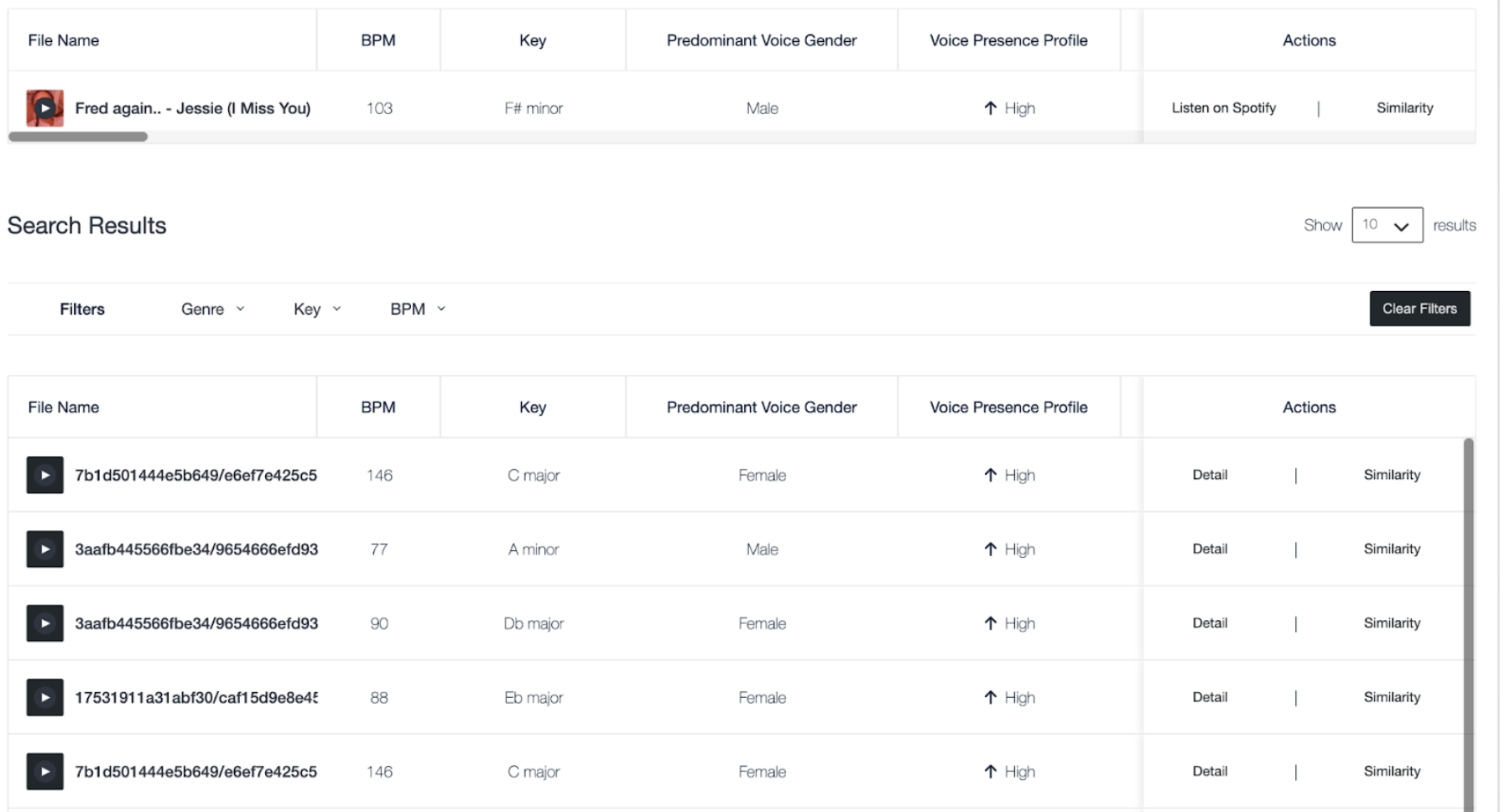
A similarity search example with a Spotify reference showing similar library results.

Finding TikTok snippets with Cyanite

Simon: One area where Cyanite has made our lives easier is product management, especially when creating snippets for TikTok and social media platforms. We frequently discuss this aspect in our distribution talks to request social media-related content, and it has proven highly effective in helping us choose the right snippets.  This approach has enhanced the quality of our materials for distribution and song pitches, resulting in increased success rates.  While the 30-second suggestions are usually accepted as is, it ultimately depends on the artist, management, label, or distributor if they want to propose different parts for their campaigns or content ideas.

A screenshot highlighting the 30 seconds Most Representative Segment

Augmented Keywords – A Shortcut To Writing Song Bios

Julia: We actually also use the augmented keywords in combination with other AIs to help us write pitches. In this use case, one AI system generates keywords to describe songs, while another AI takes these keywords and assists in crafting engaging artist bios. This collaborative process simplifies product management and is particularly beneficial for the team. It’s a smart approach that streamlines tasks and enhances the quality of their work in the music industry. Tip: For a more detailed guide on this you can also check out How to Write a Song Bio for DSPs with Cyanite+ChatGPT

Cyanite: How long did it take to properly start working with Cyanite? 

Julia: It was really easy, and we adopted Cyanite early in our workflow. Simon’s choice to integrate Cyanite into our pitching process was a significant step.  We set up a straightforward process that starts with uploading songs and automatically tagging them before moving the data over to Songspace. Right now, uploading the songs takes up most of our time. Once we get them cataloged, we put together pitching playlists and send them out to our partners.
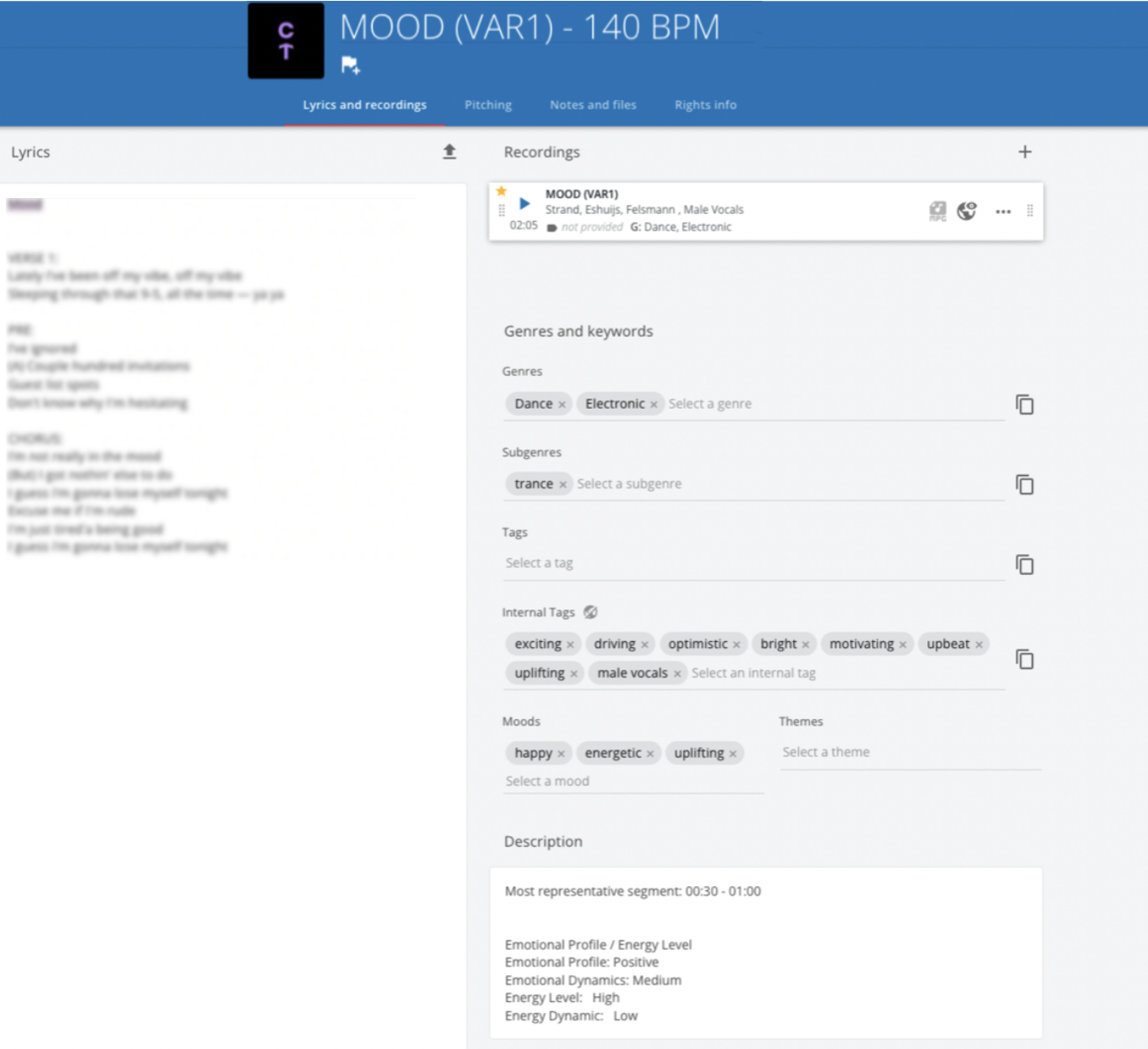
Songspace interface including Cyanite tags.

Case Study Wrap-Up

Chromatic Talents is at the forefront of reshaping the music industry through innovation and technology.  In collaboration with us, they have achieved remarkable results.

AI-powered Music Marketing and Pitching: Utilizing Cyanite’s Track-mood analysis for Spotify playlist pitching and placements, along with using the “most representative segment” for TikTok clips. 

Precision in Pitching and Sync-Briefs: Cyanite’s Similarity Search ensures swift pre-filtering of Chromatic Talents’ catalog and enables faster responses to artists & A&R briefs, saving time and costs for clients.

Streamlined Pitching with Augmented Keywords: Augmented keywords, in collaboration with other AI systems, accelerate the writing of song bios, simplifying product management.

Chromatic Talents’ seamless integration of Cyanite into their workflow demonstrates the transformative impact of technology on the music industry. By blending creative expertise with cutting-edge AI, they continue to define the future of music.


Interested in trying out Cyanite for your company? Get in touch with us here, or click the sign-up button below.

How to Write a Song Bio for DSPs with Cyanite+ChatGPT

How to Write a Song Bio for DSPs with Cyanite+ChatGPT

A Step-by-step guide: How to write a song bio for DSPs like Spotify, Youtube, Bandcamp, Soundcloud, Tidal, Deezer, and Pond5

In one of our latest blog posts, we showcased the best ways to utilize Cyanite as an artist or producer. With AI on the rise, you won’t be surprised that you can also make use of these tools to write a song bio.

Cyanite + ChatGPT: How to elevate your pitches for various DSPs.

Distributors and DSPs want to know as much as they can about your song to ensure they can place it in the right playlists and target the right audience – and we all know how challenging it can be to find the right words to describe our own music. Writing a good song bio is crucial to get playlisted on DSPs.

When uploading my songs to Pond5, this process used to take me around 2 hours per track and now it is just 20 minutes with Cyanite + ChatGPT.

Guillermo Pareja, Cyanite User

We are going to give you a step-by-step guide on how to streamline this process.

1. The Power of AI Tagging – Log into your Cyanite Account

First things first: If you don’t have an account yet, sign up here. Cyanite provides a ton of metadata for your song, and for up to 5 songs per month, it’s free. Need more? We’ve got you covered. Just upgrade to a subscription for an additional 15 monthly analyses, or get some extra one-time credits.

2. Upload your song to Cyanite

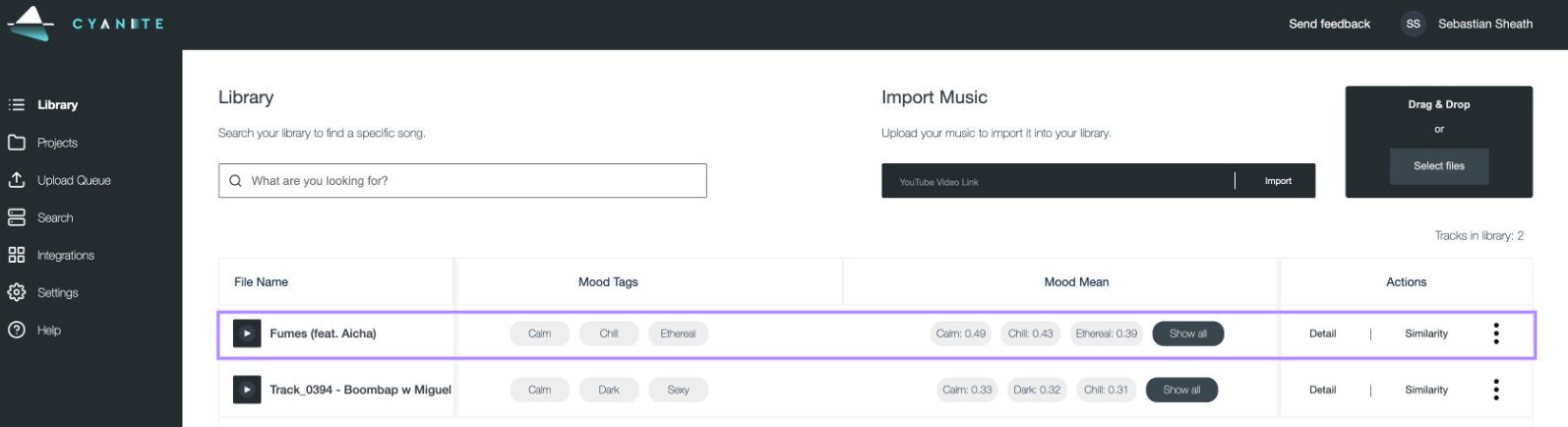
Head to “Library” and upload the song you want to use. For this use case, we need the genre, advanced moods, character, and movement tags.

To get the best results, choose the right tags from each “mean” section, offering you a percentage of every tag. Leave out the ones that you might not agree with personally, but be careful not to be too subjective!

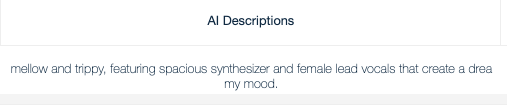
For even better results: use Cyanite’s Augmented Keywords and AI Descriptions to enhance your prompt in the next step – only available for subscription users

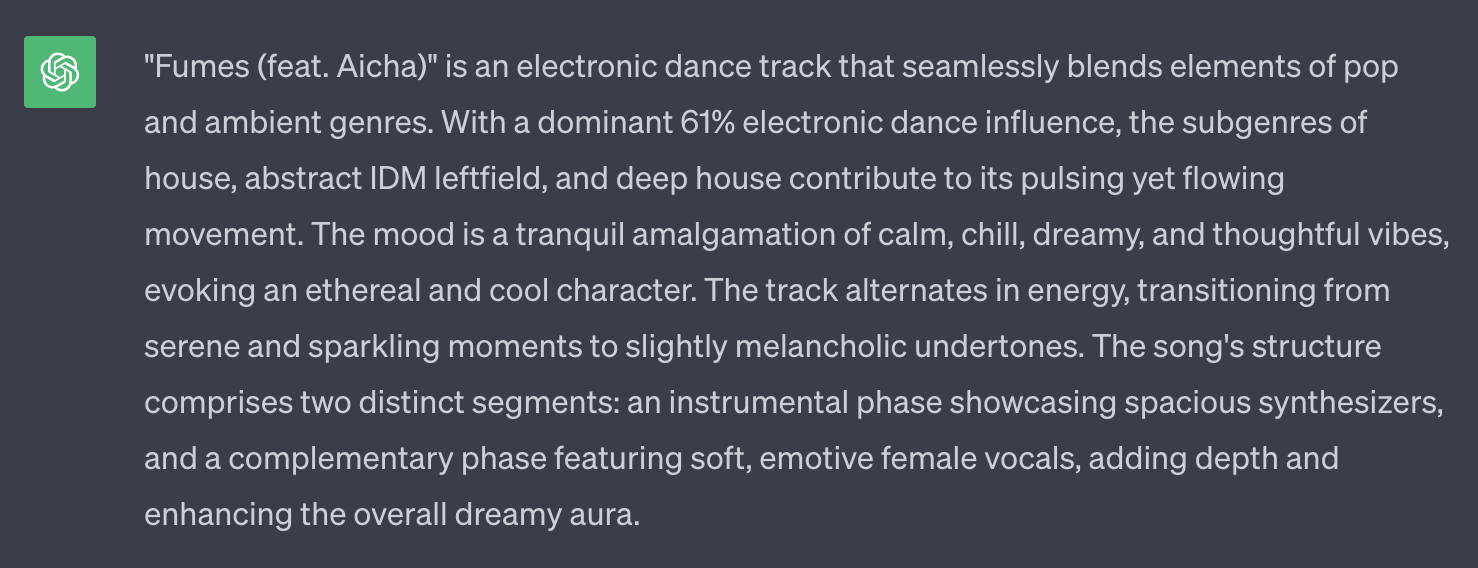
3. The Almighty Chat GPT

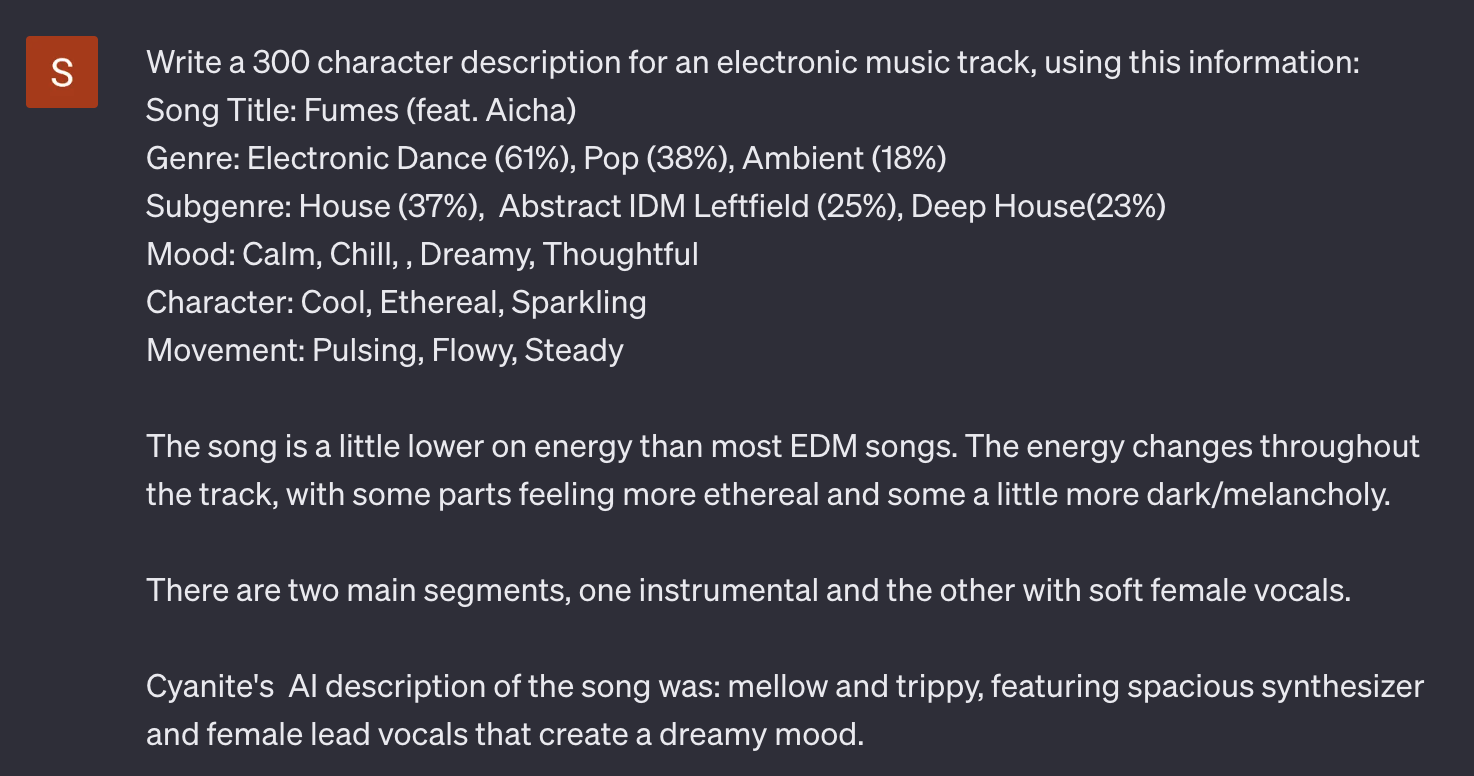
For the next step, you need to log into your ChatGPT account and start writing your prompt. Be as specific as possible about the platform you want to use the description and keywords for.

Let ChatGPT know what you are looking for – this could be anything from whole text descriptions or keywords to a brand new song title.

Then copy the genre, character, mood, and movement tags and paste them into the chatbot. 

For a better result, add Cyanites AI Description to the prompt.

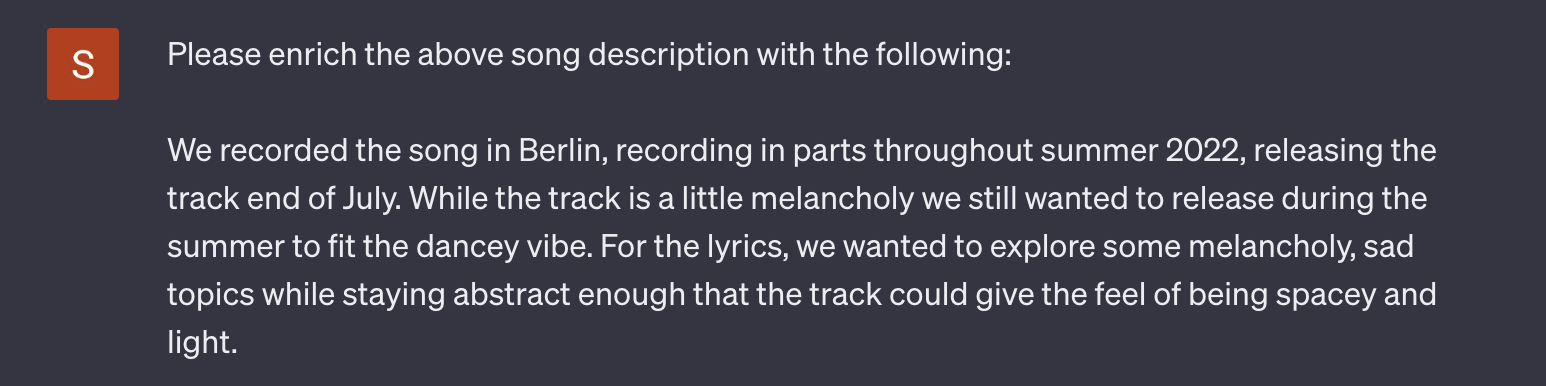
4. Pimp Up Your Prompt

You might have already found what you’re looking for. But there’s potentially more. Just like with copying homework, you want to be careful not to have the same results as everyone else on Spotify.

Try to enrich your ChatGPT prompt with personal details. This could range from anything like musical inspirations to the place where it’s been recorded. 

Pretty much anything you can think of.

5. Refine your Results

When writing your song bio, there’s no magical solution for everything, so in each case, this can be a source of inspiration rather than a finished text description or song title.

So it’s best to rewrite the text in your own words.

In any case, you’ve surely obtained results that will help you distribute your track on a variety of platforms.

Curious how the song we used sounds?

In case you discover further interesting use-cases for Cyanite, feel free to reach out to us here.

A big thank you to Guillermo Pareja for supporting us on this post. He got in touch with us to let us know about this use case and how benificial it has been to him.

Your Cyanite Team.

Launch of Cyanite for Innovators to Foster Music and AI Innovation

Launch of Cyanite for Innovators to Foster Music and AI Innovation

At Cyanite, we’re excited to launch the “Cyanite for Innovators” program—a unique opportunity for creative minds at the intersection of music and AI to thrive.

What is Cyanite for Innovators?

Cyanite for Innovators is all about fueling your passion and nurturing your creative ideas. We’re on a mission to support innovators who are eager to redefine the future of music, AI, and the creative arts. If you’re a visionary, this program is tailor-made for you.

Who Can Apply?

Cyanite for Innovators is aimed at non-commercial projects and will support individuals and teams from diverse sectors, including NGOs, arts, research institutions, not-for-profit organisations, grassroots movements, and creative coding communities.

What’s in it for You?

  • Access to Cyanite’s Cutting-Edge Technology: Get your hands on our API and technology—the tools that power innovative music analysis and recommendation.
  • Early Prototypes and Expert Guidance: We’ll provide you with early access to prototypes and the wisdom of our experts. Consider it your backstage pass to unlocking your project’s potential.
  • Diverse and Inclusive: At Cyanite, we embrace diversity. We’re actively looking for projects that represent a wide spectrum of backgrounds and experiences. Everyone is welcome here.

Success Stories

Before you apply, let’s take a look at some of the incredible projects that Cyanite has already supported:

  • Kaloyan Madzhunov: A recent graduate from Fontys in Eindhoven, Kaloyan developed an AI film music discovery tool that helps filmmakers find the perfect soundtrack for their projects (2023).
  • Josefa Rackl: A Master’s project at Technical University Augsburg, “Synergy” is a generative design system for music visualizations using AI (2022).
  • vi · son:Mixing Senses, 2021” was a digital exhibition exploring the multisensory perception of music in the digital age (2021).
  • Rehaan Mazid: The Developers Student Club at Vellore Institute of Technology, India, created “Songified,” an AI-powered music discovery app (2021).

How to Apply

Ready to embark on your innovation journey with Cyanite for Innovators? Here’s how:

1. Visit this link.

2. Submit a detailed proposal outlining your project’s objectives, timeline, and expected outcomes.

3. Allow us four to eight weeks to review your application and get back to you.

Key Applicant Requirements and Expectations

  • Eligibility: As mentioned earlier, this program is aimed at non-commercial projects around individuals and teams from various backgrounds and sectors worldwide.
  • Project Focus: We’re looking for projects that leverage AI technology in innovative ways within the music and audio domain. Whether it’s music tagging, content analysis, recommendation systems, or creative applications, we’re excited to see your ideas.
  • Impact and Purpose: Your project should demonstrate a clear and positive impact on the music industry, society, arts, culture, or related fields.
  • Diversity and Inclusion: At Cyanite, we cherish diversity and inclusion. We actively encourage applicants from diverse backgrounds, LGBTQ+ communities, and minority groups to join us on this journey.

Ready to make your mark? Apply now, and let’s create a positive ripple effect together. Your creativity knows no bounds, and at Cyanite, neither do the possibilities.

Any Questions?

Don’t hesitate to reach out to us via innovators@cyanite.ai


Impression from Josefa Rackl’s graduation project “Synergy” fueled by Cyanite data

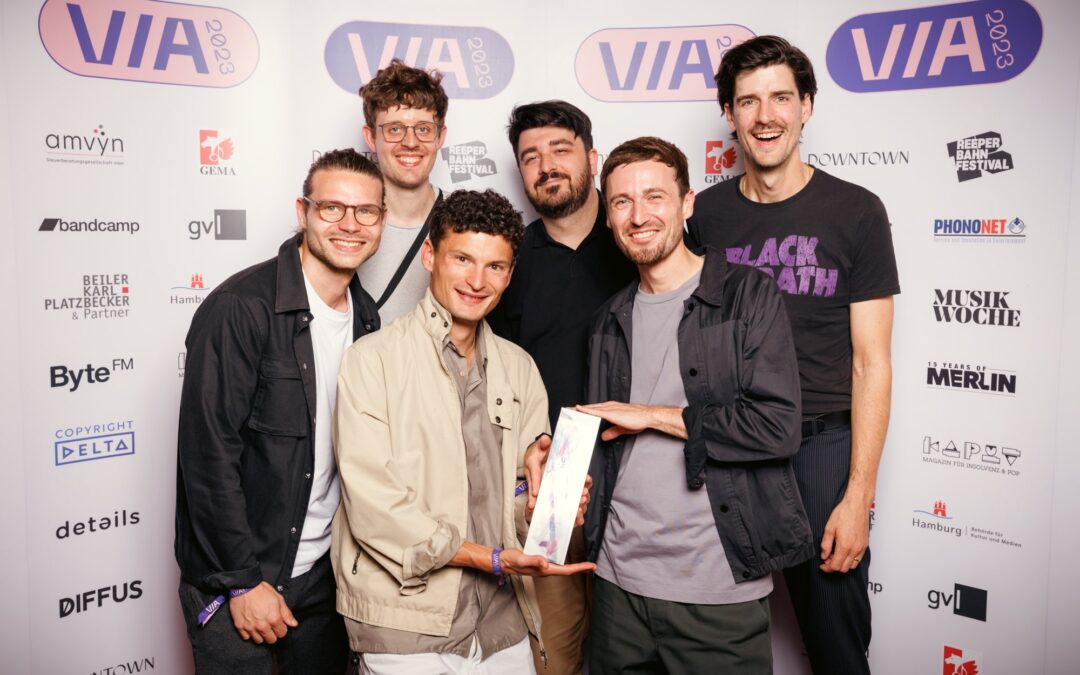
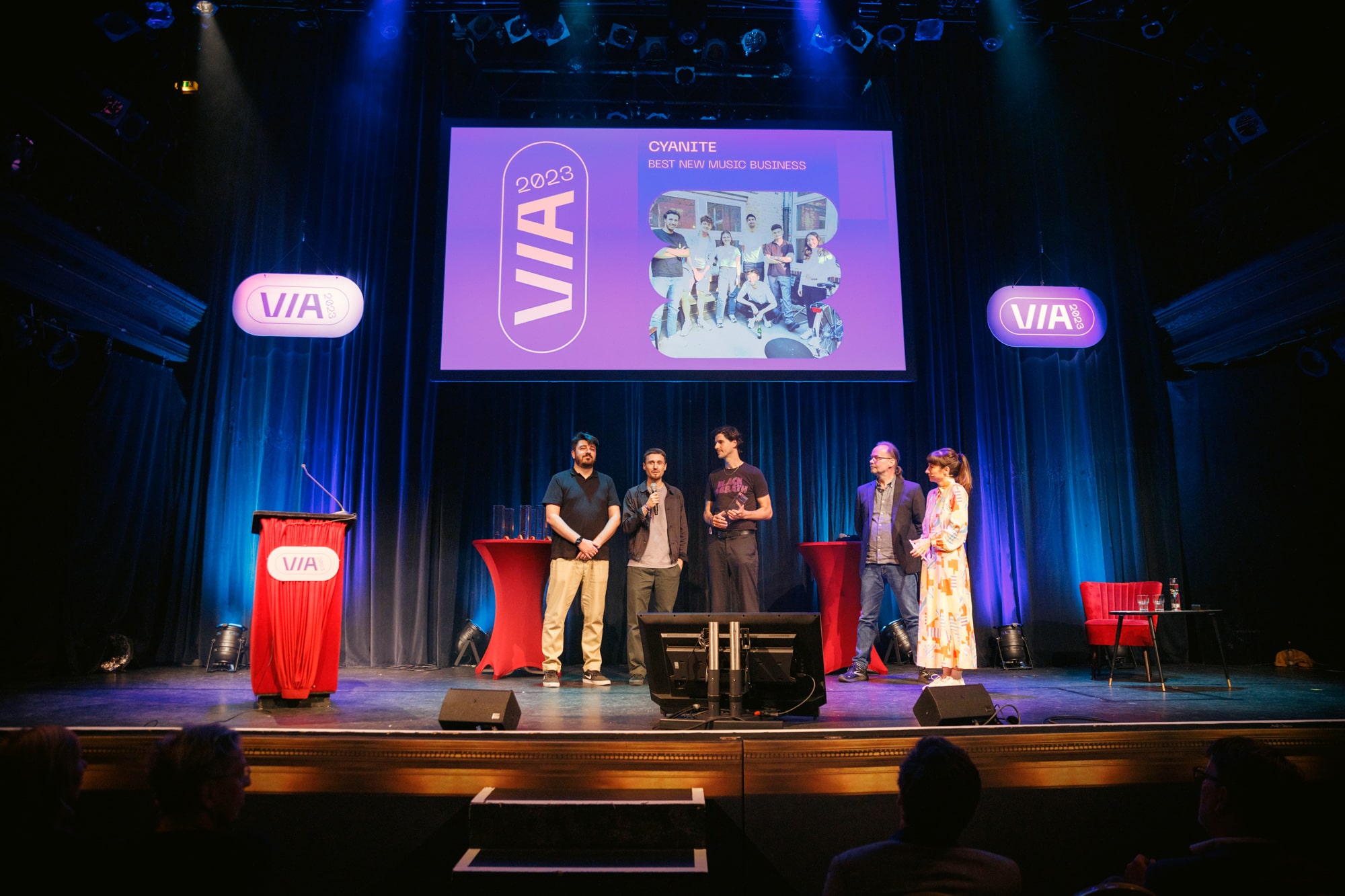
Cyanite Receives “Best New Music Business” Award at VIA 2023

Cyanite Receives “Best New Music Business” Award at VIA 2023

VUT Indie Awards Winners

Every year, the VUT awards 6 music companies, artists, and projects for exceptional quality and new innovations, independent from commercial success.

The awards were held at this year’s Reeperbahn Festival, where countless artists from 40 countries performed, and discussions and podcasts surrounding the music industry took place.

We are proud to announce that Cyanite won the VIA award for Best New Music Business.

A Big Thank You

First of all, we want to thank the expert jury and the other nominees in our category: A-Okay Management and The Changency.

This award is not only the result of outstanding work by our team but also our community, which has made all of this possible. Thanks to our amazing enterprise clients worldwide and the whooping all-time high of over 45,000 web-app users!

We take this award as validation that we’re moving in the right direction and as motivation to continue improving our services for our enterprise partners, as well as for artists and creatives around the world.


Your Cyanite Team


More info about the award: https://www.viaawards.de/
More info about the VUT: https://www.vut.de/vut-english/
Official press release: https://www.vut.de/vut/aktuelles-vut/artikel/details/via-kritikerinnenpreise-der-unabhaengigen-musikbranche-verliehen-1/ 

4 Best Ways to Use Cyanite for Artists, Producers, and DJs

4 Best Ways to Use Cyanite for Artists, Producers, and DJs

For all Late Bloomers – What is Cyanite?

Cyanite is no newcomer to the music industry. Launched in 2019, its industry-leading AI has brought a user traffic of over 40,000 users to the web app. It helps creatives and artists get the most out of their music by extracting powerful metadata, from moods to whole audio descriptions, making Cyanite an indispensable tool for musicians. We at Cyanite are proud to collaborate with industry majors like BMG, MySphera, and Pond5.

Let’s take a closer look at how artists, producers, and DJs can make the most out of the data hiding behind the audio by exploring the best use cases.

Cyanite’s Auto Tagging has been a life saver as I’ve been submitting my music to Spotify playlists and music sync libraries. It has helped me get placed and get my music massive momentum on Spotify.

Garrett Lodge, Cyanite User

1.  What Genre is my Music? – Playlist Pitching

With Spotify offering thousands of genres to choose from, defining your song’s genre(s) has become a challenging task. However, selecting the right genres is crucial, especially for newcomers to the industry, as it significantly impacts your track’s discoverability.

Thanks to DAW’s like Logic Pro X and Ableton, creating music is easier than ever before. But this also means the competition is bigger than ever.
In order to break through the mass of thousands of songs that get uploaded daily, providing metadata for your tracks is crucial.

We’ve trained our AI with datasets of thousands of songs and matching descriptions, to help it understand music and genres possibly even better than you do. Curious about how to use this for your music?

Check out this blog post: “How to Create a Spotify Pitch That Works? – Playlist Pitching Guide with Examples and Tips – Cyanite.ai”.

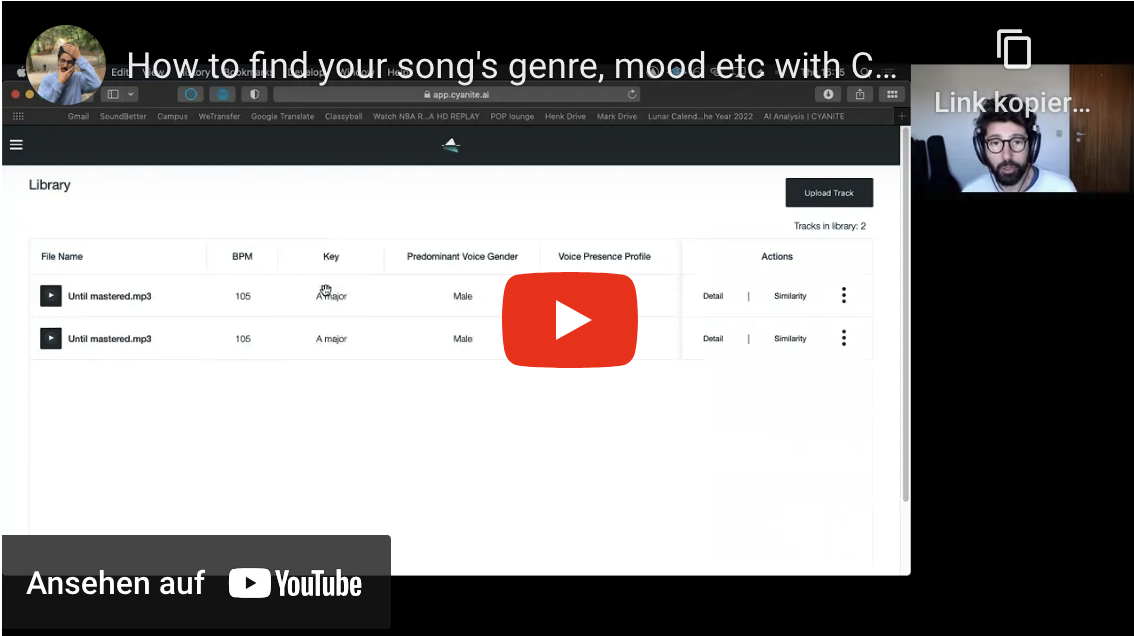
Or, check out this step-by-step video guide by Indie Music Producer below.

2.  Self-Promote Your Music: Create Custom Audiences

In the music industry, 40 years ago, you needed a record deal to get your music heard. Fast forward to 2023, and you have powerful marketing tools at your fingertips, such as Instagram, TikTok, and Google Ads. To maximize the effectiveness of your advertising, it’s essential to narrow down your audience as much as possible. Metal Heads are unlikely to click on an ad for your new Hyper-Pop song – or are they?

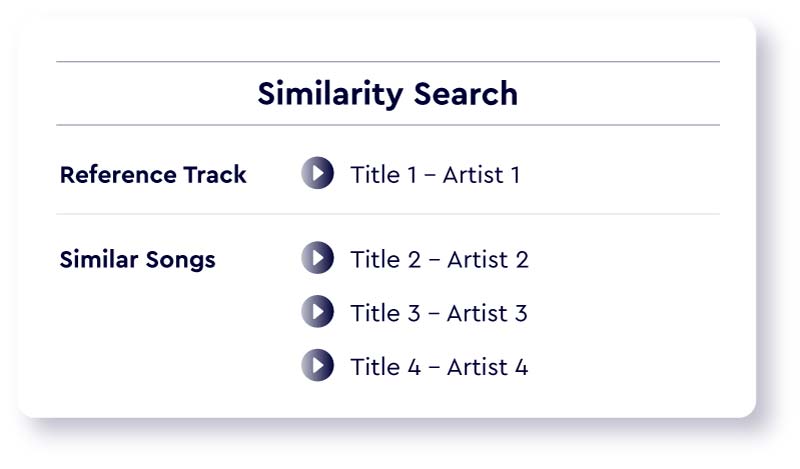
If you have your song ready for release and struggle to find the perfect match with another artist’s project, let me introduce you to Cyanite’s Similarity Search. Curious? We’ve dedicated an entire blog entry to elucidate the process: How to Create Custom Audiences for Pre-Release Music Campaigns in Facebook, Instagram, and Google – Cyanite.ai.

Illustration of an interface showing a list of similar songs to a reference track

3.  Write Press Releases with Cyanite

While promoting your tracks on Instagram and other social media platforms is an excellent starting point, music marketing is quite similar to receiving presents on Christmas – the more, the merrier.
Crafting a press release and submitting it to blogs or platforms like SubmitHub is an effective way to get more attention for your music.

Although producing your music feels natural, describing the finished product from an external perspective can be challenging. By utilizing Cyanite’s Auto-Tagging and Mood Detection algorithms, you can bypass the arduous task of finding the right words. Learn more in our blog post: “How to Write Press Releases and Music Pitches with Cyanite”.


4.  Crafting the Perfect Playlist for Every Occasion

If you’re a DJ or playlist curator, you’re undoubtedly aware of the significant time investment required to create the perfect play- or setlists. However, with Cyanite’s Similarity Search, you can drastically streamline this process. Pair it with the harmonic mixing tool, Camelot Wheel, and you’ll achieve smoother transitions than ever before. Discover our comprehensive guide on optimizing your playlists and DJ sets on our website: “How to Use Cyanite to Optimize Your Playlists and DJ Sets for Harmonic Mixing and Similarity”.

Sign Up for Free – Get Started!

Interested in trying out any of our examples for yourself?
Simply sign up here or delve deeper into Cyanite’s offerings on our newly redesigned website, Cyanite.ai, or explore our latest updates on our blogs for the latest news.

And as always, if you have questions, just send an email to support@cyanite.ai.

Your Cyanite Team.