Cyanite: Algorithms try to make exactly such generalizations. To what extent do you come into contact with artificial intelligence in your profession, and where do you see the greatest potential for integrating this technology into music therapy and medical applications?
Josephine: In my practical work as a music therapist I have less contact with artificial intelligence, but of course both patients and I are surrounded by our environment and therefore also by AI. Patients use health monitoring apps with sleep and movement trackers and are reminded by the app: ‘Now is the time to get up to benefit your health’, so we are already getting in touch with AI. If you look at research projects in the field of psychotherapy, it is also very exciting for the field of music therapy. For example, an embodied AI – like a robot, can be useful for interactions with elderly people who often suffer from social isolation, or for children with autistic children to practice social interaction. Also apps that are used as virtual therapists can, for example, chat with people with depression and thus simulate a therapeutic conversation. AI development is not directly affecting my work, but I can see its presence in fields around me: Research projects are also taking place in our sister disciplines of music medicine and psychology.
For example, there are many who try to explore the correlation between psychological and physiological parameters to music listening behaviour – that they then analyse and implement in machine learning models. I think that we are still at the beginning, and there is certainly potential for us music therapists to be open to – or at least we should know about what is being developed. In the end our patients will use the products that are developed with the help of these research results, so we have to stay informed.
There are very exciting projects. There is a research group in Finland at the University of Jyväskylä that is developing a machine learning model to support affect regulation of young people through listening to music via an app. And this is, of course, a topic I am very much involved with, because I often develop playlists with the young people who are in therapy with me. Not based on AI, but completely human. I also believe that in the long term such apps could be included as a support for music therapy treatment. But as with the use of AI in the diagnosis of cancer, in the end the doctor has the last word. And I also think that in music therapy treatment, the music therapist and the patient should participate in the process and have the last word on what is being listened to. Think of the example before with the car accident and the woman, the machine didn’t know the individual case.
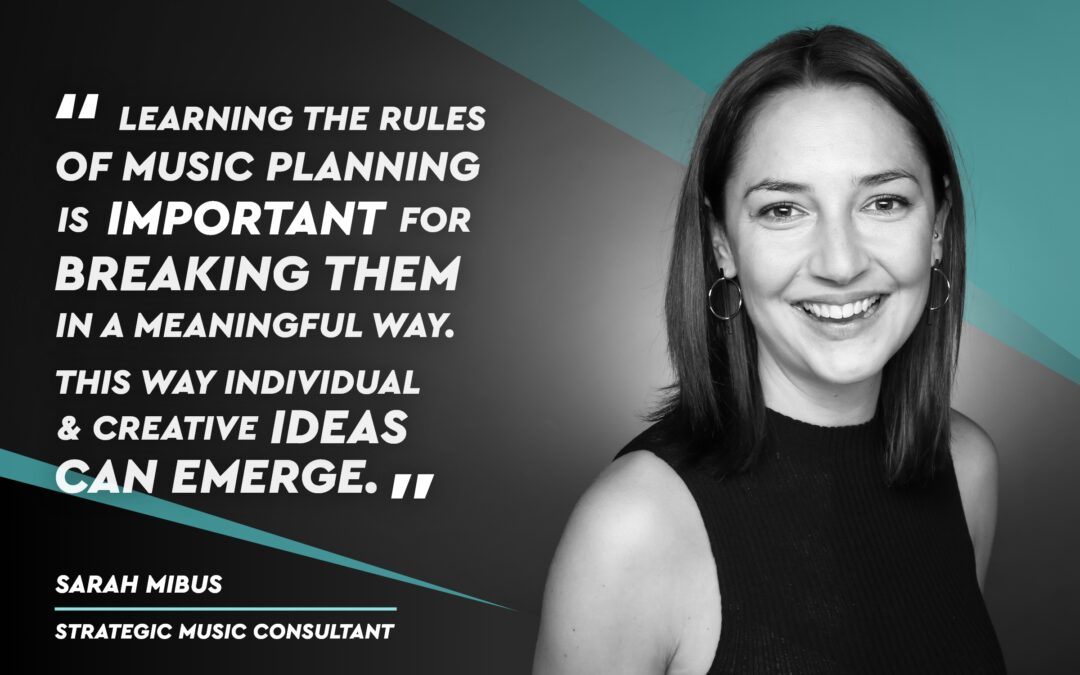



“I think it’s important to learn the rules of music planning and music use in order to then break them in a meaningful way. In this way, individual and creative ideas can emerge.”